Can a Small Retailer Rent a Storage Container for Holiday Overflow Stock, and Where Does It Go in the Parking Lot?
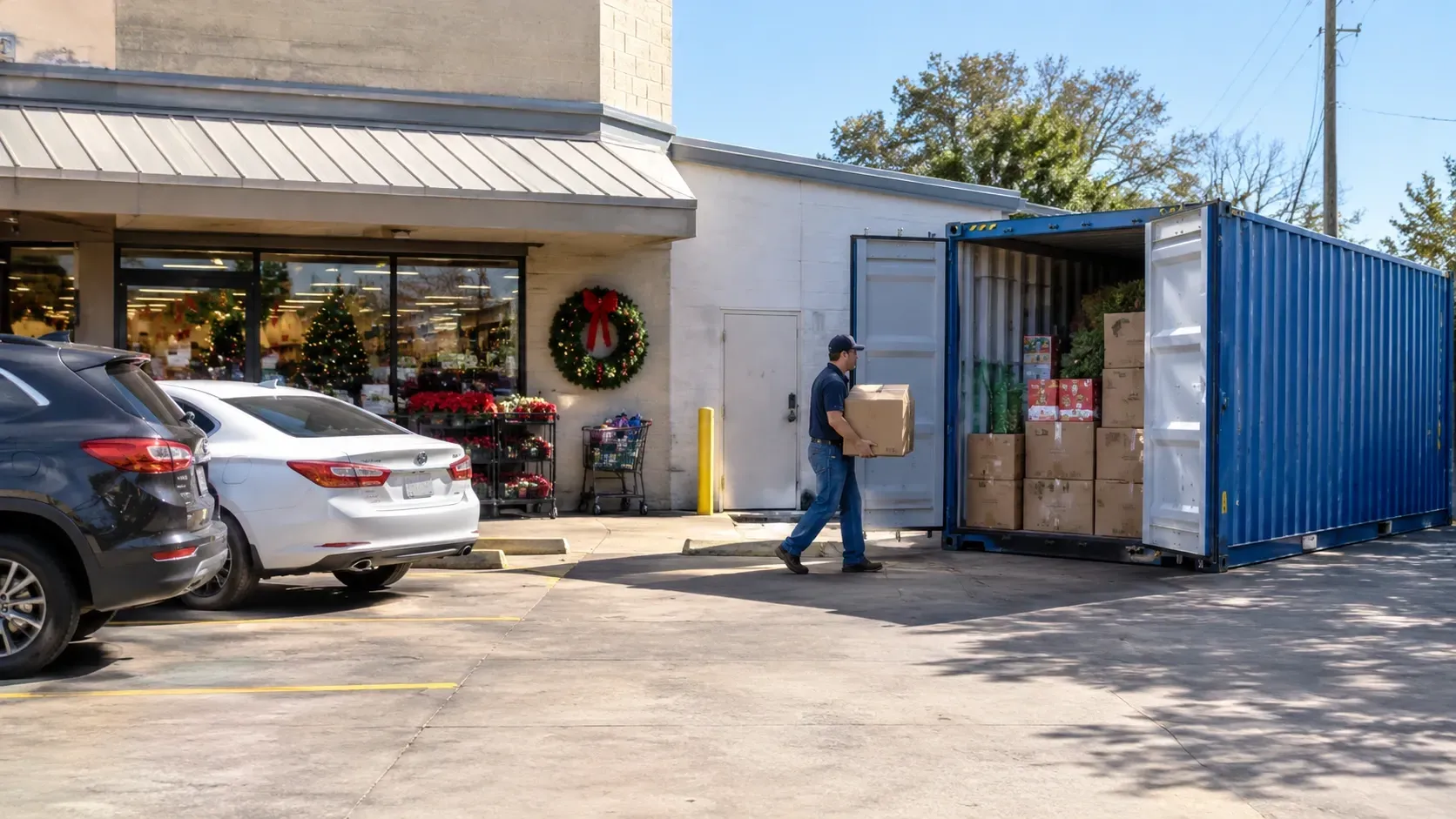
Table of Contents
- Introduction
- Why Retailers Reach for a Container in November
- Where It Can Actually Sit in a Parking Lot
- The Space the Truck Needs, Not Just the Box
- Permission: Who Has to Say Yes Before Delivery
- Loading Retail Stock Into a Steel Box
- When a Container Is the Wrong Answer
- Conclusion
- Request a Rental Quote for Seasonal Stock
- Frequently Asked Questions
Key Takeaways
- Yes, and retail stores and parking lots are one of the industries we already serve.
- The box needs 8 feet of width. The truck needs 60 feet of straight run for a 20-footer.
- On a leased lot, your landlord matters more than city hall does.
- A steel box in December is a cold box. Plan what goes in it accordingly.
- Every space the container occupies is a space a customer cannot park in.
Introduction
Yes, and a storage container rental is a common answer to a holiday stock problem, but the part most retailers get wrong is the parking lot, because on a leased lot around Angleton or anywhere else the property owner usually has to sign off first. The spot also has to be firm and level, and the delivery truck needs far more room than the container does.
We have been delivering these for over fifteen years. The calls that go wrong are almost never about the container. They are about the sixty feet behind it.
Why Retailers Reach for a Container in November
Because the stockroom was sized for a normal week and November is not a normal week.
The pattern is the same every year. Holiday inventory arrives in a block, well before it sells. The back room fills, then the aisles behind the registers fill, then boxes start living somewhere a fire marshal would rather they did not. Meanwhile the thing you actually need in December is floor space and staff who are not climbing over pallets.
A container in the lot solves that by moving the surplus outside the building while keeping it on the property. No driving to a storage facility, no scheduling, no second set of keys. You walk out the back door.
Retail stores and parking lots are one of the industries we list on our homepage, alongside construction, schools, churches and disaster response, so this is not an unusual request. It is a seasonal one, which mostly means booking a storage container rental earlier than you think you need to.
Where It Can Actually Sit in a Parking Lot
On something firm and level, which a parking lot usually is, with two caveats.
Our requirement is a level, firm surface. Concrete, asphalt or compacted gravel is ideal, and the ground has to carry the container plus everything you put in it. A paved lot normally qualifies without any preparation at all, which is the easy part.
The caveats:
- Soft or aging asphalt. Older lots, or a hot stretch of weather, can let a loaded container bite into the surface. Worth asking your landlord where they would rather it sat.
- What is overhead. The site has to be clear of low branches and power lines. A container is placed by a truck that tilts it off the bed, so clearance above matters as much as the footprint.
If you ever place one on grass or dirt instead, we recommend setting it on four-inch concrete blocks. On a lot, that rarely comes up.
Think about where it sits in the flow too. Against a back fence line near the receiving door is almost always better than the first row by the entrance, both for your staff and for the customers you still want parking there.
The Space the Truck Needs, Not Just the Box
This is the one that surprises people, so here are the real numbers.
A 20-foot container needs 60 feet of straight area for the truck to back in, tilt and pull straight out. A 40-foot container needs 120 feet. That straight run is the binding constraint, not the footprint the container ends up occupying.
Walk it before you call. Stand where you want the container and pace off sixty feet straight behind it, then ask:
- Is anything parked in that run on a normal Saturday, and can it be coned off for the delivery window?
- Are there islands, curbs, light poles or cart corrals in the way?
- Can the truck get from the street entrance to that line without a tight turn?
- Is the drive aisle wide enough for the truck itself, not just a car?
If the answer is no, that usually points to a 20-foot unit rather than a 40, or to a different corner of the lot. Both are easy to sort out on the phone and miserable to discover with a loaded truck idling at your entrance. One more thing worth knowing: do not move a rental container yourself once it is placed. If it needs to go somewhere else, that is a call to us.
Permission: Who Has to Say Yes Before Delivery
Usually your landlord, and that conversation should happen first.
Most small retailers lease their space, and the parking lot belongs to the property owner rather than to the tenant. A lease often has something to say about what can be placed outside, how long it can stay, and which parking you actually control. Get that approval in writing before you book a delivery. It is the single most common reason a retail container order gets cancelled.
Then there is the local side. Cities and counties take different positions on temporary containers in commercial lots, and some limit how long one can stay. We are not going to tell you what your city's rules are, because they vary and we would rather you heard it from them than from us. Call the city or county, and ask your property manager, before the container is scheduled.
Two practical ones your landlord will care about even if nobody else does: do not block a fire lane, and do not take accessible parking spaces. Ask the property manager which spaces you may use, and plan around the lot's required parking count.
Loading Retail Stock Into a Steel Box
A container is dry and secure. It is not a climate-controlled room, and the difference matters for inventory.
Things worth thinking about before the first pallet goes in:
- Temperature swings. A steel box on the Gulf Coast gets cold on a January night and warm on a sunny afternoon in the same week. Candles, cosmetics, chocolate, adhesives and anything else with a temperature range on the label do not belong in there.
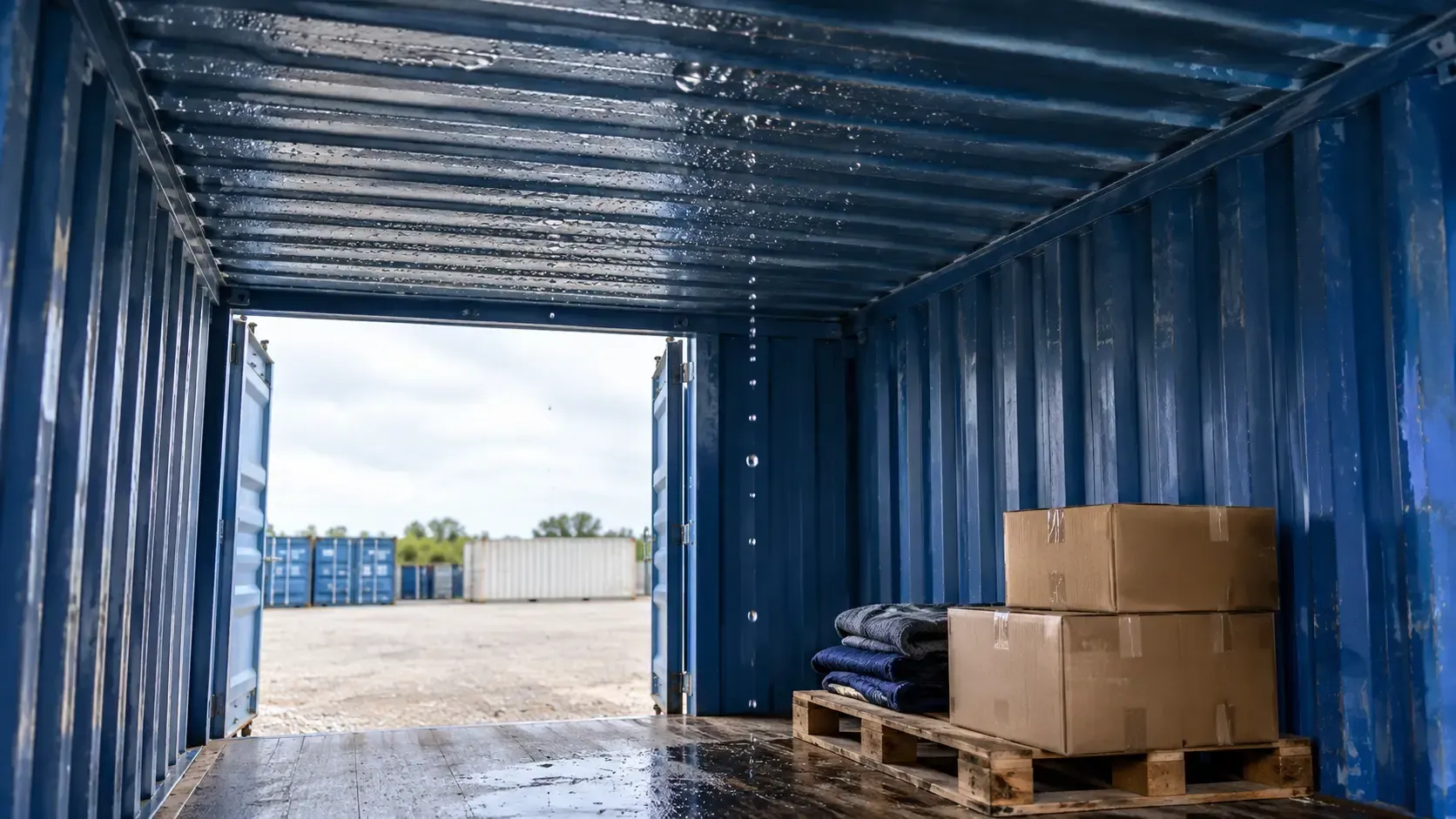
- Moisture from the stock itself. Cardboard carries water, and a sealed container full of damp boxes will produce condensation on the ceiling that then drips back onto your inventory. That is a real phenomenon and the reason water dripping inside a dry container confuses people every winter. Load dry, leave air gaps, and keep boxes off the floor.
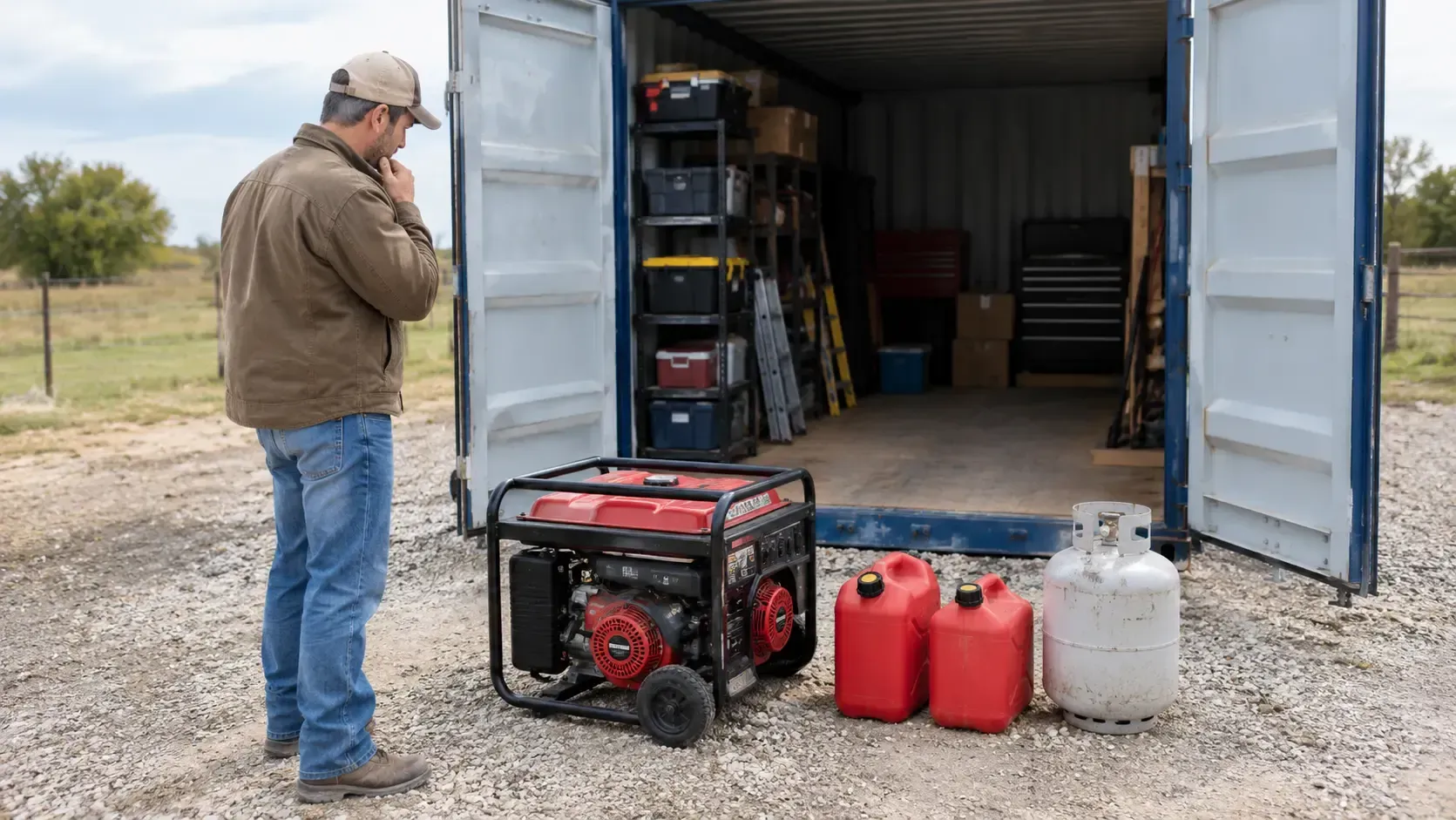
- What cannot go in at all. Hazardous, flammable, illegal or restricted materials are out, which for a retailer usually means aerosols, lighter fluid, fuel for a generator and some cleaning chemicals. The detail on what cannot go in a container is worth two minutes before you load.
- Organize for retrieval, not for fit. You will be in there every few days in December. Leave an aisle, label the ends of boxes, and put the fast movers by the doors.
- Security. The container is steel, it closes solidly, and it is one more thing in your lot. Ask us about container sizes and talk to your own insurer about how off-building inventory is covered, because that is their question rather than ours.
When a Container Is the Wrong Answer
Three situations, and we would rather say so now.
When you only need a little space. If the overflow is a dozen boxes, a tidier stockroom and a shelving unit will beat a steel box in the lot.
When the lot is already tight at Christmas. Every space the container occupies is a space a customer cannot park in, during the eight weeks when that matters most. A 40-foot unit plus clearance eats a real piece of a small lot. Count the spaces you are giving up and decide whether the trade works.
When you need it conditioned. If the stock genuinely cannot handle temperature swings, a container is the wrong tool and no amount of planning changes that.
Conclusion
Go out to your lot this week with a tape measure and your lease, in that order, because the two things that stop a retail container delivery are a run that is too short and a landlord nobody asked. Settle both before Thanksgiving and the rest of a storage container rental is a phone call. Leave it until the stock is already stacked in the aisles and you will be solving a space problem in the week you have the least time to solve anything.
Request a Rental Quote for Seasonal Stock
Tell us the size you think you need, where in the lot you want it, and when the stock lands, and we will tell you whether that spot works before anybody schedules a truck. A Mobile Box has been family owned and operated for over fifteen years, delivering on our own trucks with drivers who have been with us 16 years and more, across the Texas Gulf Coast and the Houston area. Ask about
renting a container for the season, or
ask the office
about sizes and current availability. Sales and container yard: (979) 665-8899. Office: (979) 798-5798.
Frequently Asked Questions
Can a business put a storage container in its parking lot?
Usually yes, but the property owner normally has to approve it first if the lot is leased, and local rules vary on how long a container can stay. Confirm both before scheduling a delivery.
How much room is needed to deliver a storage container?
A 20-foot container needs about 60 feet of straight area for the truck to back in, tilt and pull out. A 40-foot container needs about 120 feet. The site also has to be clear of low branches and power lines.
What surface does a container need to sit on?
A level, firm surface that can carry the container and its contents. Concrete, asphalt or compacted gravel is ideal. On grass or dirt, we recommend setting it on 4-inch concrete blocks.
Can I keep retail inventory in a storage container over winter?
Most dry goods are fine. A container is not climate controlled, so anything sensitive to temperature swings or moisture should stay inside, and stock should be loaded dry with air gaps between boxes.
How long can I rent a container for?
Short-term and longer-term rentals are both available. Tell us roughly how long you expect to need it and we will set up an arrangement that fits the season.
Recent Posts