Is a 'Cargo Worthy' Shipping Container Really Better Than a 'Wind and Watertight' One?
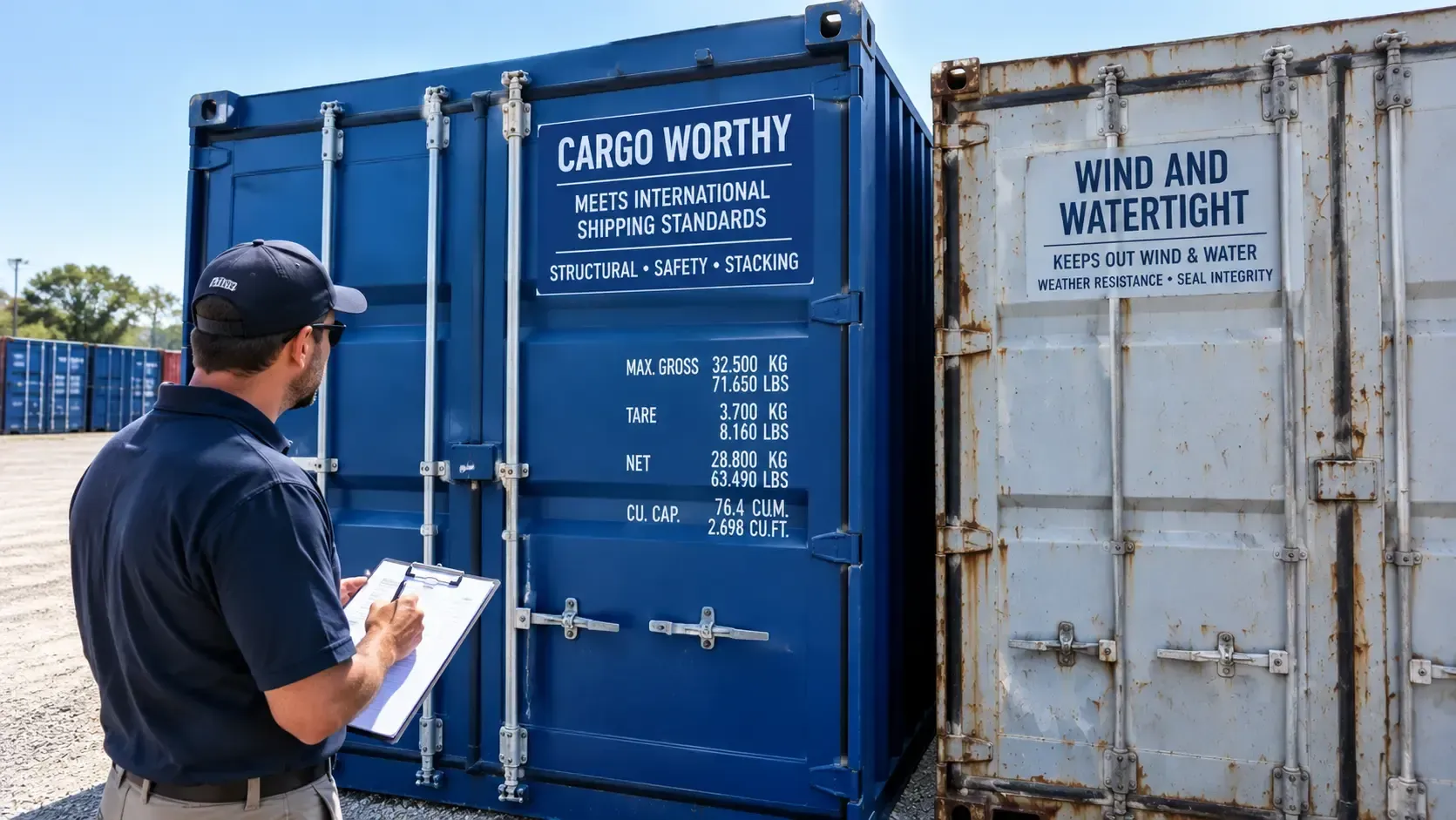
Table of Contents
- Introduction
- Better for Shipping, Not Automatically Better for You
- What Cargo Worthy Shipping Container Certification Covers
- What Wind and Watertight Container Actually Means
- Where Shipping Container Grades Genuinely Differ
- When You Should Pay for the Higher Grade
- Why Grade Labels Vary Between Sellers
- Conclusion
- Ask Which Grade Is in the Yard Today
- Frequently Asked Questions
Key Takeaways
- Cargo worthy is a shipping certification. Wind and watertight is a weather seal description.
- If the container will never ship again, the certification buys you nothing operationally.
- Both grades should keep your things dry. Only one is cleared to go back on a vessel.
- Grade terminology is not uniform across sellers, so the inspection matters more than the label.
- Ask what is physically in the yard today rather than ordering by grade name.
Introduction
Cargo worthy generally means a used container is still structurally sound enough to be loaded and shipped overseas, while wind and watertight means it keeps weather out but may not qualify for shipping, so when you shop containers for sale the higher grade is better for one specific purpose rather than better in general. For a container that will sit on the ground holding your things, that distinction often costs money without changing anything.
Which is the honest answer most sellers do not lead with.
Better for Shipping, Not Automatically Better for You
The grades answer different questions, and only one of them is about keeping your belongings dry.
Cargo worthy exists because international shipping has requirements. A container going back on a vessel has to be structurally capable of being stacked, lifted, and loaded, and that capability is assessed and certified. It is a transport qualification.
Wind and watertight describes the seal: the container keeps wind and water out. That is the property that matters when a container is parked on your property with your equipment inside.
So the question is not which grade is better. It is whether you need a transport qualification. If the container will never move again except on a truck to your site, cargo worthy certification is a cost without a corresponding benefit.
What Cargo Worthy Shipping Container Certification Covers
A cargo worthy shipping container has been inspected against the standards that international shipping requires.
What the assessment generally addresses:
- Structural integrity of the frame, corner posts, and castings, which carry stacking loads
- Floor condition sufficient to carry freight
- Door operation and seal under working conditions
- Absence of through-holes or significant corrosion
- Repairs performed to an acceptable standard
- Suitability for stacking and lifting by handling equipment
The emphasis is on load and handling. A container can be entirely watertight and still fail a cargo worthy assessment because of something structural that only matters when it is lifted full and stacked six high.
That is the part buyers often miss. The grade is about what the box can survive doing, not about whether your boxes stay dry.
What Wind and Watertight Container Actually Means
A wind and watertight container keeps weather out, which for storage is the job.
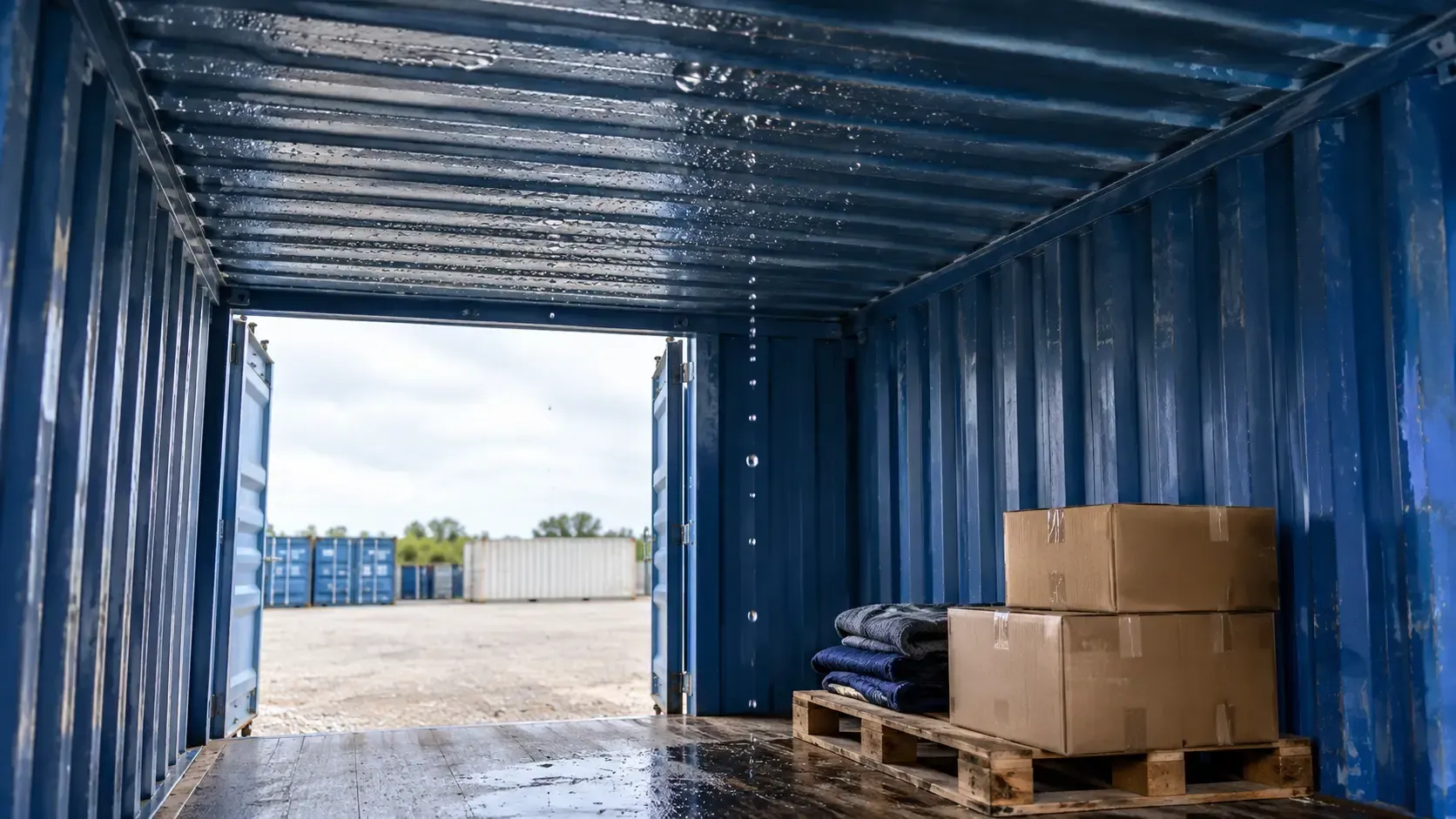
What it means in practice: no daylight visible from inside with the doors closed, doors that seal and latch, a roof that does not let water through, and no holes in the panels. It may have cosmetic damage, surface rust, visible repairs, or dents. None of those affect whether your contents stay dry.
Our containers are better than wind and watertight and are inspected before sale or rental, which is the standard we hold stock to. Used containers may show normal signs of wear from previous use, and that wear is usually cosmetic rather than functional.
The practical test is the same one that works for any container. Stand inside, close the doors, and look for light. That single check tells you more about whether your things will stay dry than any grade label on a listing.
Where Shipping Container Grades Genuinely Differ
The real differences are narrower than the price gap suggests.
| Cargo worthy | Wind and watertight | |
|---|---|---|
| Wind and watertight | Yes | Yes |
| Certified for ocean shipping | Yes | Not necessarily |
| Can be stacked loaded | Yes | Depends on condition |
| Structural assessment | Required | Required |
| Required | Required | Required |
| Required | Required | Required |
| Suitable for ground storage | Yes | Yes |
The last two rows are the ones that decide most purchases. Both work for storage. One costs more.
Where cosmetic condition matters to you, the higher grade often looks better, and that is a legitimate reason to pay more. It is just a different reason than the one the grade name implies.
When You Should Pay for the Higher Grade
There are real cases, and they are specific.
Pay up when:
- You may ship the container internationally at any point, which is the actual purpose of the certification
- You will stack containers loaded, where structural capability matters
- You are modifying it, since cutting into compromised steel creates problems
- Appearance matters, such as a container visible to customers
- You want maximum remaining service life for a long term outdoor installation
- Resale matters and the certification will carry value later
Skip it when the container is going to sit on your land, hold equipment or inventory, and stay there. In that case the sensible spend is on getting the right size and the right placement rather than on a grade.
If you are also weighing near new stock, one-trip containers are a separate question again, and they sit above both of these grades on both condition and price.
Why Grade Labels Vary Between Sellers
This is the part that matters most practically, and it is rarely said out loud.
Grade terminology is not applied uniformly across the industry. One seller's wind and watertight is another's cargo worthy minus the paperwork. Some yards grade conservatively and some do not. A certification issued years ago describes the container on that day, not necessarily today.
What follows from that:
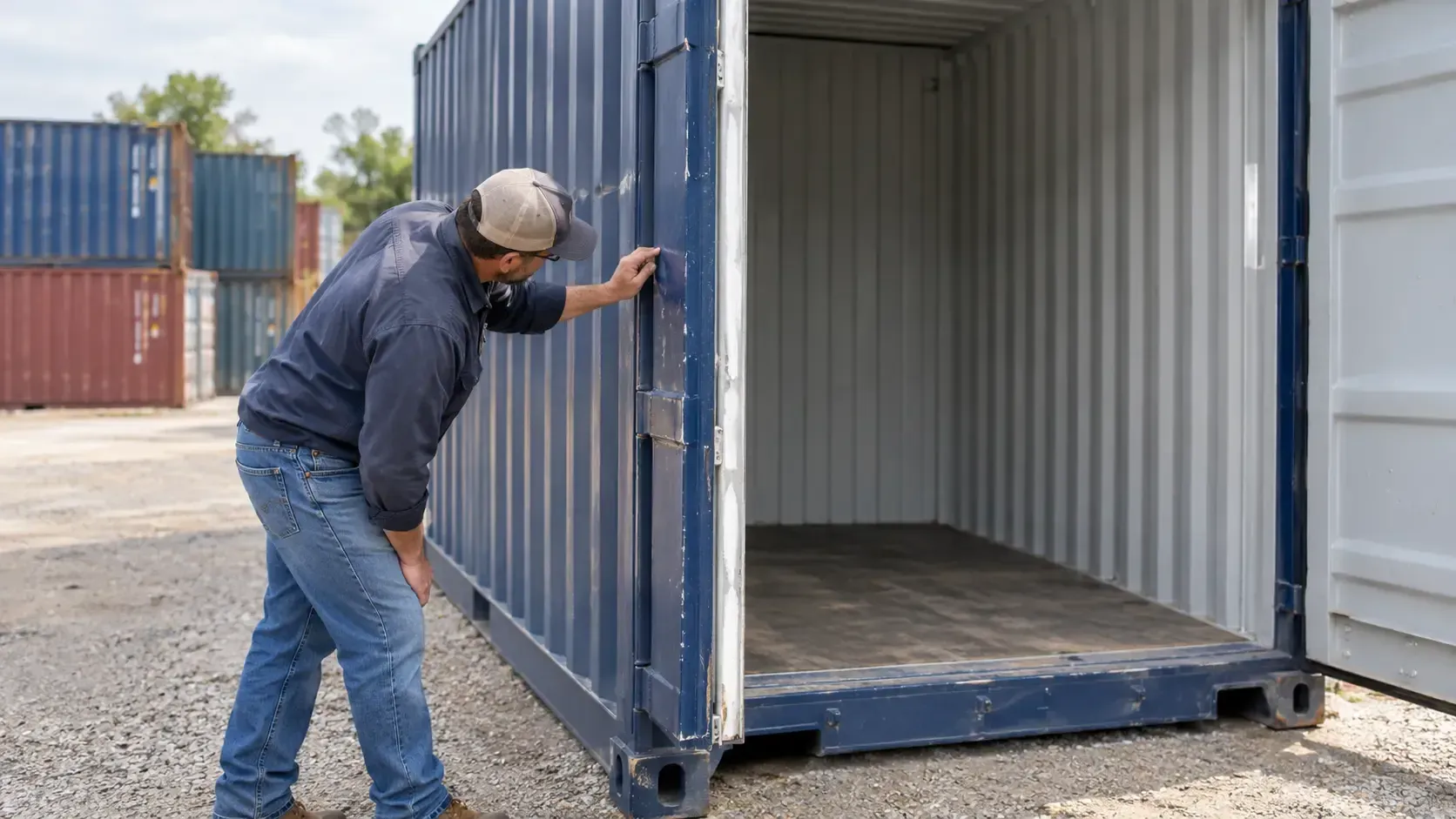
- Inspect, or get detailed photographs. The container in front of you is the fact. The label is a claim.
- Ask what the grade means to that seller specifically, since the answer varies.
- Ask when any certification was issued, because condition changes.
- Judge the doors, floor, and roof yourself rather than relying on the grade.
We encourage customers to inspect available containers when possible for exactly this reason. Yard stock changes constantly, and the honest answer to which grade you should buy usually starts with what is physically available right now.
Conclusion
Cargo worthy is better at one thing: going back on a ship. Wind and watertight is enough for the thing most buyers actually need, which is keeping weather off their belongings on their own property. If international shipping, loaded stacking, or modification is in your future, the higher grade earns its cost. If not, you are buying a certification you will never use. Inspect the container rather than the label, check the doors, the floor, and the roof, and ask what is in the yard today.
Ask Which Grade Is in the Yard Today
Yard stock changes, so the most useful conversation is about what is actually available rather than what grade you think you need. Tell us what the container is for and we will tell you honestly whether paying up makes sense. A Mobile Box is family owned and operated, our containers are inspected before sale or rental, and we deliver on our own trucks in 20 and 40 foot sizes. Call the yard at (979) 665-8899 or
ask the yard and ask what came in this week.
Frequently Asked Questions
What does cargo worthy mean on a shipping container?
It generally means the container has been inspected as structurally sound enough to be loaded and shipped overseas, covering the frame, corner castings, floor, doors, and absence of through-holes. It is a transport qualification rather than a description of the weather seal.
What does wind and watertight mean?
That the container keeps wind and water out: no daylight visible from inside with the doors closed, doors that seal and latch, an intact roof, and no holes. It may have cosmetic damage, surface rust, or visible repairs that do not affect whether contents stay dry.
Is cargo worth the extra cost for storage?
Usually not. If the container will sit on your property and never ship again, the certification covers a capability you will not use. It makes sense if you may ship it, stack it loaded, modify it, or need it to look good.
Will a wind and watertight container keep my things dry?
Yes, that is precisely what the grade describes. The practical test is standing inside with the doors closed and looking for daylight. No light means no holes, which is the thing that matters for storage.
Are container grades standardized between sellers?
Not reliably. Terminology varies, yards grade differently, and a certification describes the container on the day it was issued. Inspect in person where possible, or ask for detailed photographs of the doors, floor, and roof.
Recent Posts