Is Rent-to-Own on a Storage Container Ever Cheaper Than Renting Month to Month or Buying Outright?
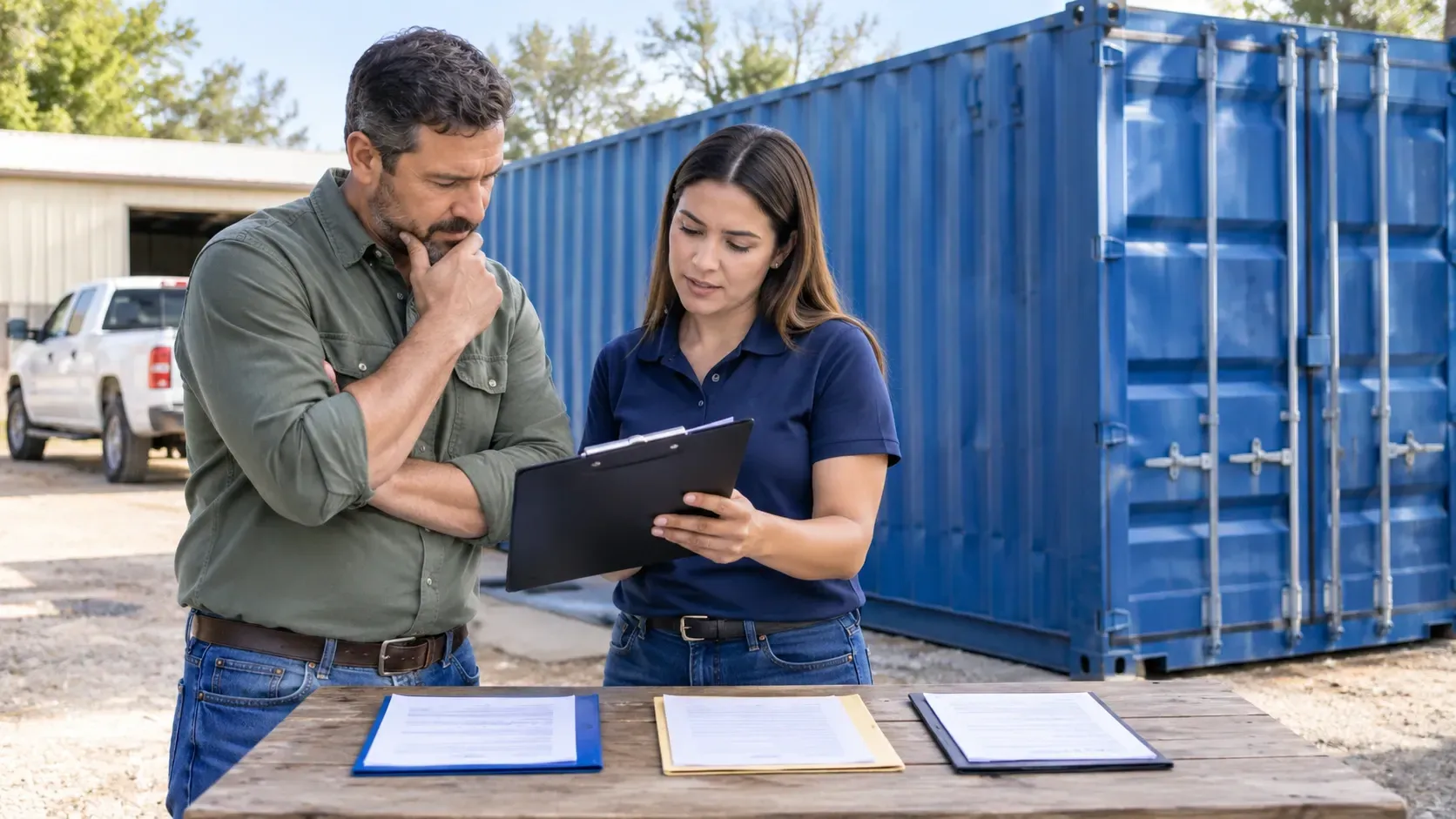
Table of Contents
- Introduction
- What Rent-to-Own Actually Is
- The One Variable That Decides the Cost
- When Short-Term Renting Wins
- When Buying Outright Wins
- When Rent-to-Own Makes Sense
- What to Get in Writing Before You Sign the Agreement
- Conclusion
- Ask for a Written Rent-to-Own Quote
- Frequently Asked Questions
Key Takeaways
- Rent-to-own is about cash flow, not about the lowest total number.
- The variable that decides everything is how long you will keep the container.
- Short rentals are cheapest when the need has an end date.
- Buying is usually cheapest per year when the container is staying permanently.
- Our container sales are final, so the inspection matters more on a purchase.
Introduction
Rarely, if you are comparing the total you will have paid at the end, because a rent-to-own storage container is built to lower what you pay on day one rather than what you pay overall, which makes it a cash-flow tool rather than a discount, and the choice between it, short-term renting and buying comes down almost entirely to how long the container is staying.
We sell all three and we have no reason to push you toward one. The wrong choice usually costs people more than the price difference between options.
What Rent-to-Own Actually Is
A rent-to-own storage container is one you use now and own later, under the terms of a written agreement.
The structure is straightforward. You choose a container, submit an application, sign an agreement, make a down payment, and the container is delivered. You then make scheduled payments, and once the requirements in that agreement are met, the container is yours.
What makes it different from renting is the ending. A rental ends with us picking the container up. Rent-to-own ends with you keeping it.
What makes it different from buying is the beginning. A purchase means paying the price now. Rent-to-own means starting with a down payment and paying the rest over time.
Everything that actually determines the cost, the term, the payment schedule, what happens if you stop, and exactly what has to be satisfied before ownership transfers, lives in the agreement rather than on any web page, including ours. Our own FAQ says the terms are explained before signing, and that is the conversation that matters.
The One Variable That Decides the Cost
How long you will keep it, and almost nothing else.
Every one of these three options is cheapest in a different time band, and the bands are not subtle:
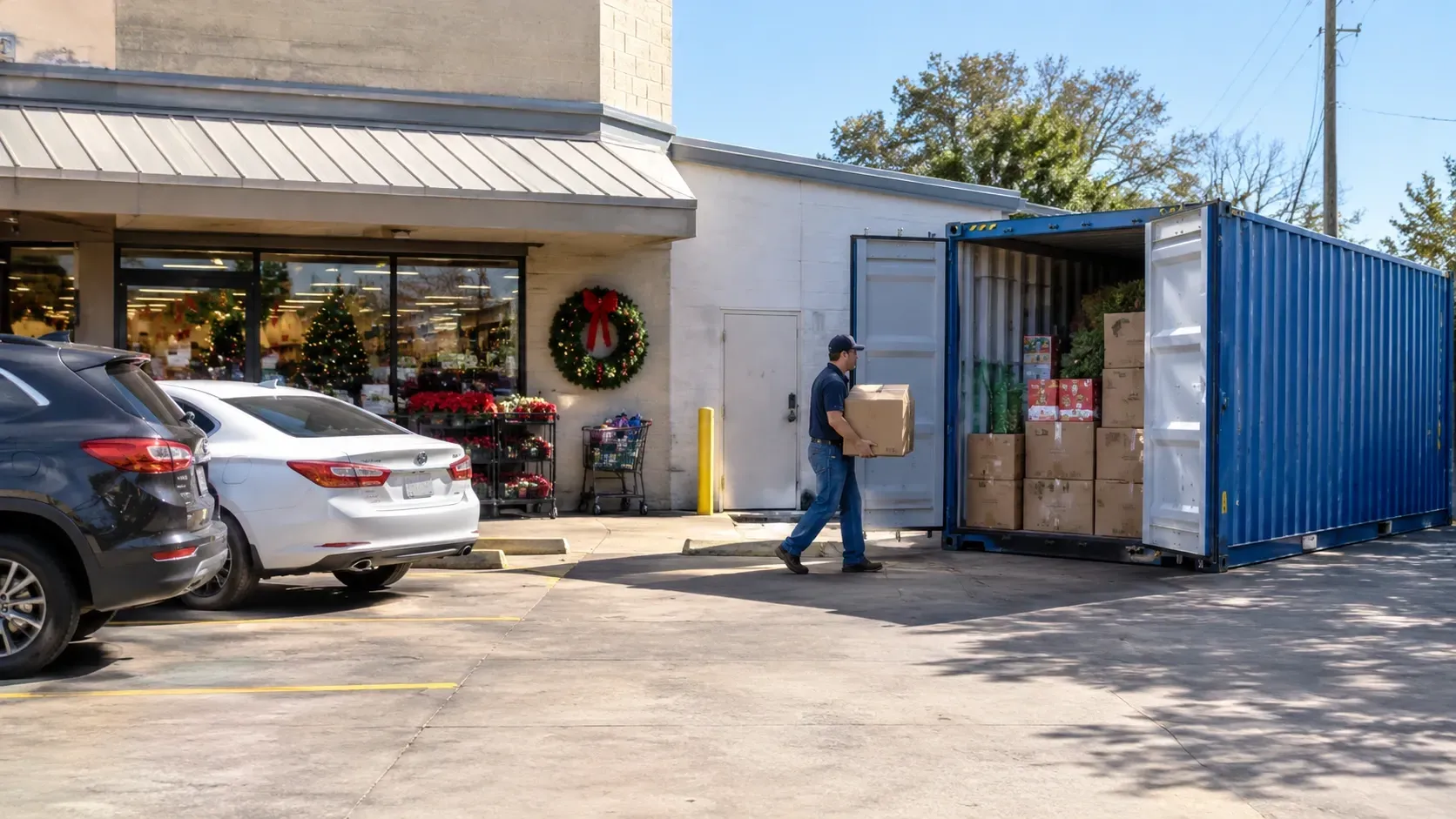
- A short, defined need. A move, a remodel, a storm cleanup, a seasonal overflow with an end date. Renting is almost always the cheapest way through it, because you stop paying when we pick it up.
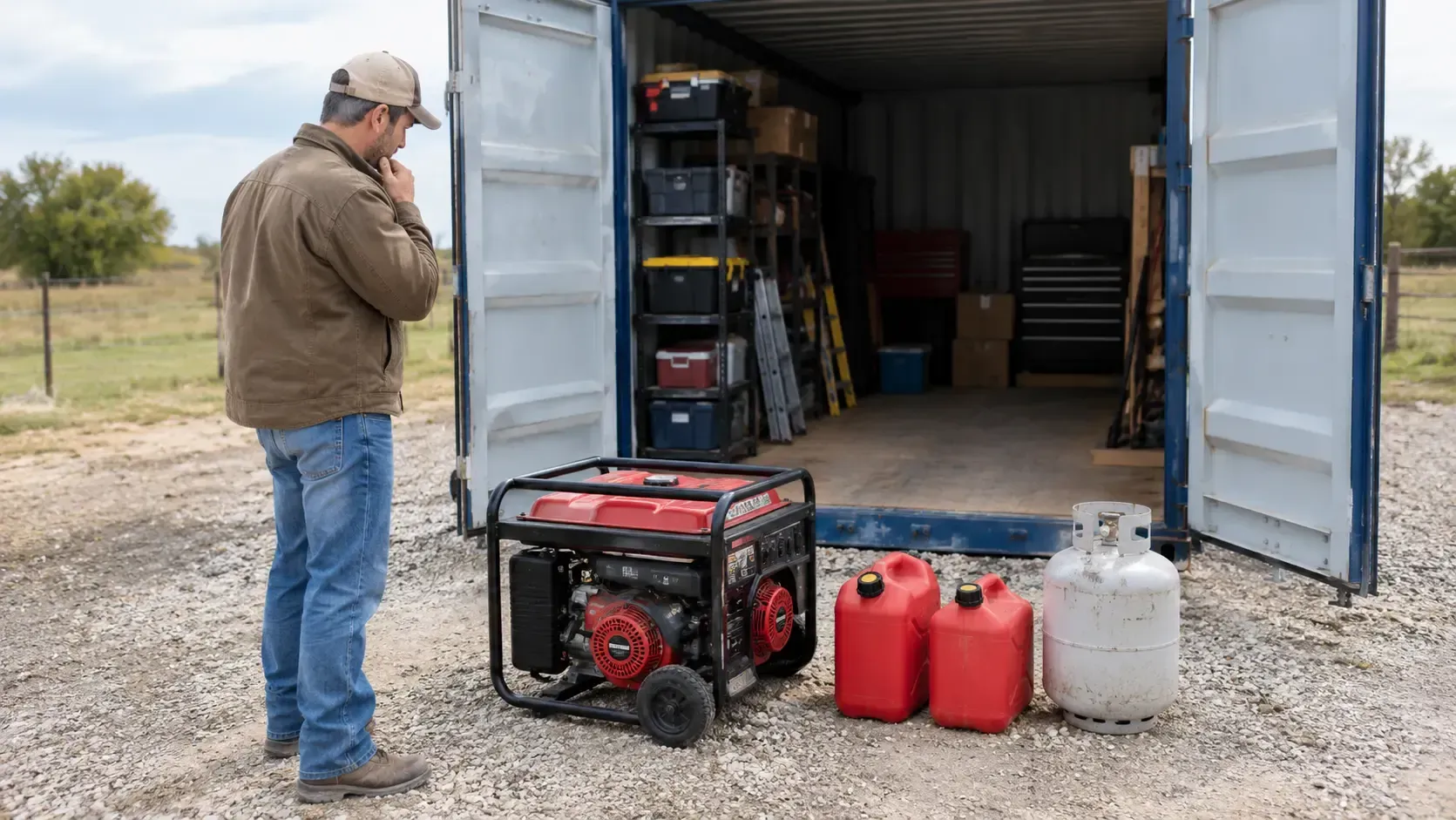
- A long or permanent need. A container that will be on your property for years as a shop, a ranch store, equipment housing or jobsite storage. Buying usually costs the least per year, because the payments stop and the asset is yours.
- A long need with no cash available now. You know you want to own it and the purchase price is not something you can hand over this month. That is the gap a rent-to-own storage container exists to fill.
So the honest first question is not "which is cheapest." It is "how long is this really staying?" People consistently underestimate this. A container rented for a three-month remodel that stretches to two years has quietly become the most expensive option on the list.
Rates depend on size, duration, location and other factors, so ask us for current numbers on all three rather than guessing from an article. We would rather do the comparison than have you work it out from the wrong assumptions.
When Short-Term Renting Wins
When the need has an end date you believe in.
Renting is the lowest commitment and the lowest exposure. You pay while you have it, we deliver it and we come get it, and there is no asset to resell when you are finished. For a seasonal stock problem, a house move or a few months of jobsite storage, nothing else competes.
It is also the right call when you are not sure. If you genuinely do not know whether this is a six-month problem or a six-year one, renting while you find out costs less than committing to the wrong structure and unwinding it later. You can move to a different arrangement once you know.
The limit is simple. Renting never builds toward anything. Once the need stops being temporary, the arithmetic turns against it, and that turn happens sooner than most people expect.
When Buying Outright Wins
When the container is not leaving, and you have the money now.
Buying outright ends the payments permanently. There is no term, no schedule and no agreement to satisfy, and the container is an asset you can sell on if your situation changes. For anything permanent, that is usually the lowest cost per year by a clear margin.
Two things to know before you do it:
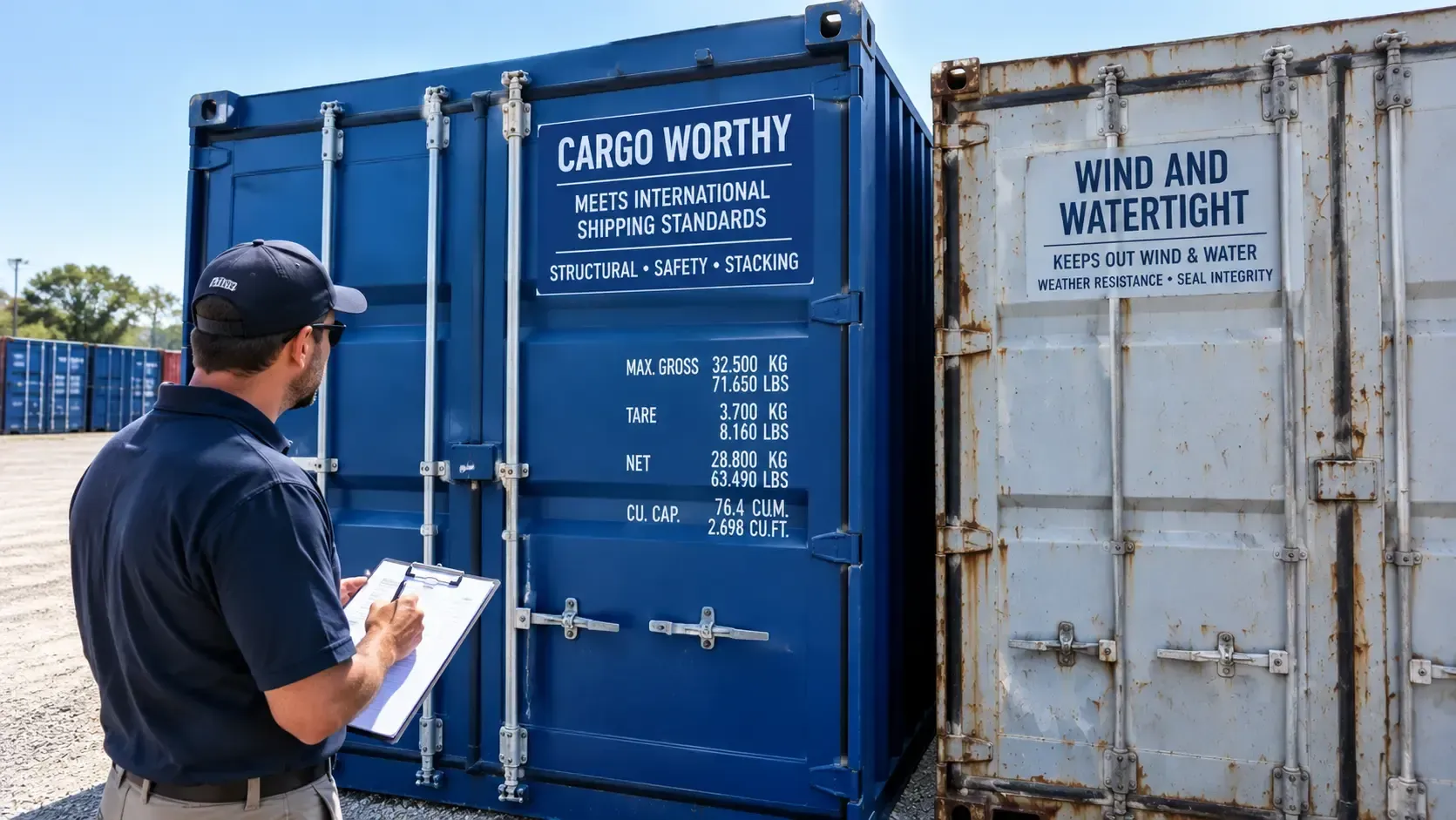
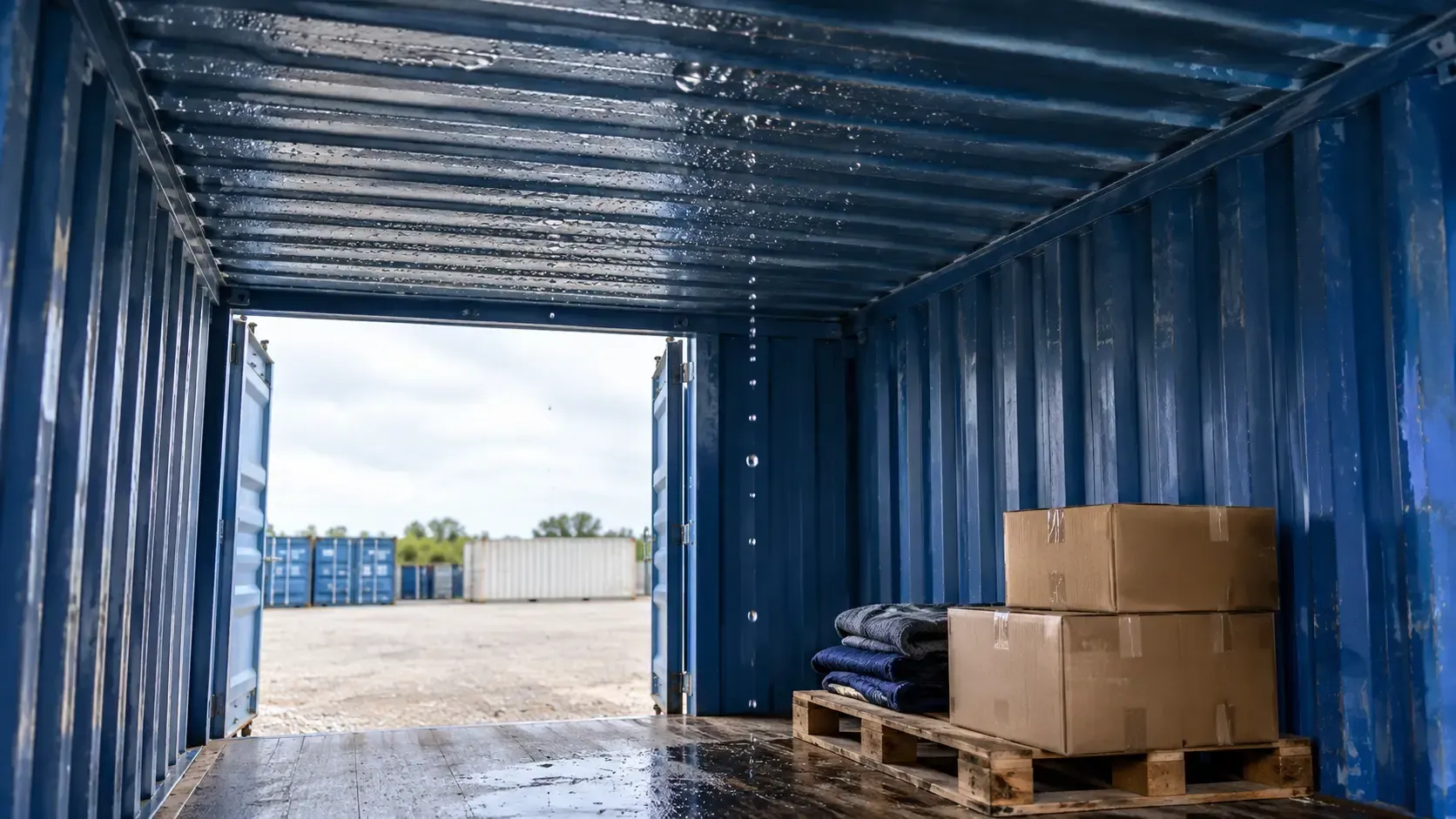
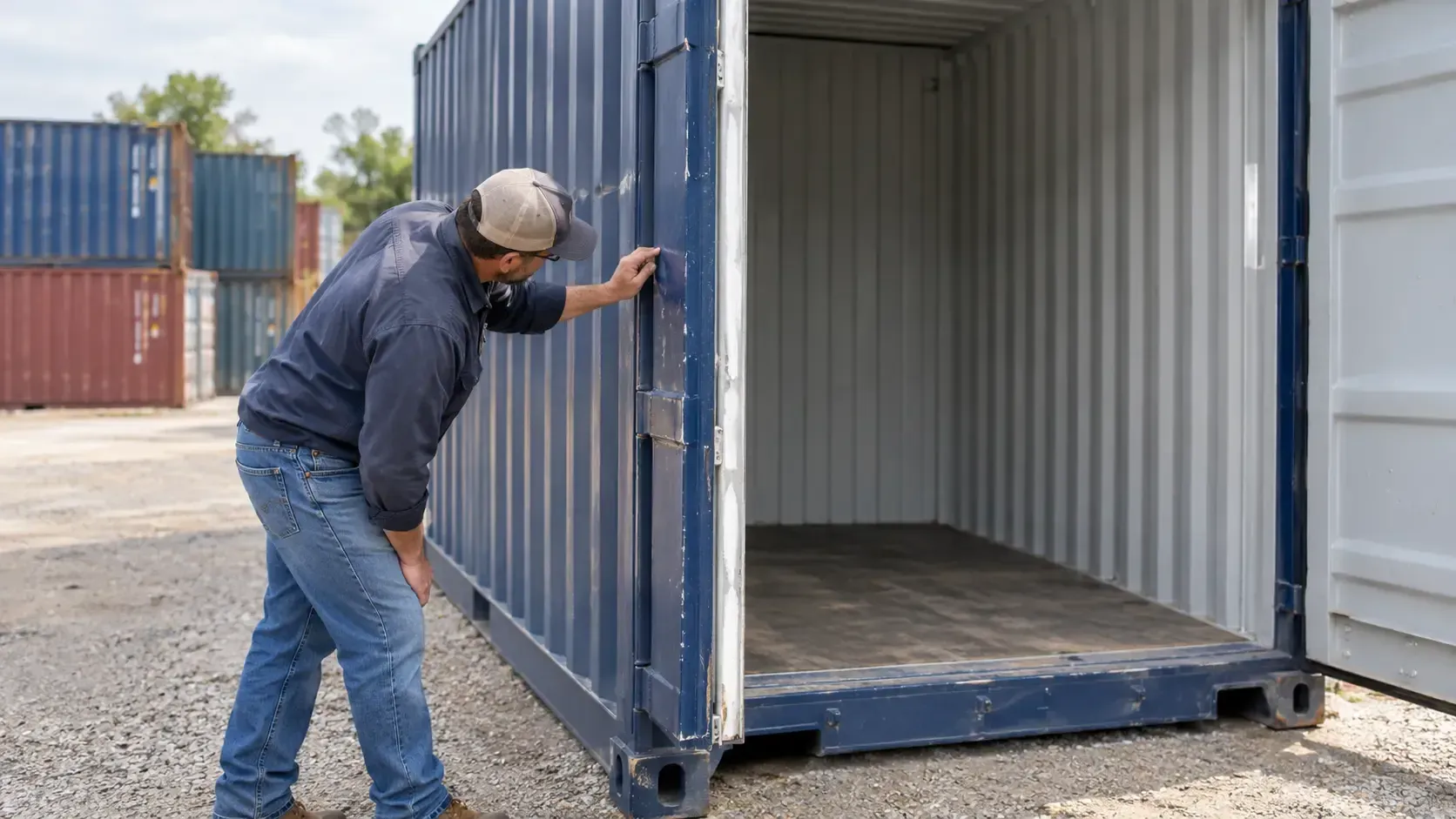
- Condition matters more on a purchase, because you are keeping whatever you buy. We inspect containers before sale or rental and ours are better than wind and watertight, and used units can still show normal wear from previous use. We encourage customers to come look at available containers in person, and that is a genuinely useful afternoon. What to check and why is covered in more detail in our breakdown of container condition and grading terms.
- All sales of containers are final. That is our published policy, and it is the reason the inspection is worth the trip rather than a formality.
When Rent-to-Own Makes Sense
When you want ownership, you need the container now, and the purchase price is the obstacle.
That is the whole case, and it is a good one. A contractor who needs secure jobsite storage this month, a business whose equipment is sitting under a tarp, a property owner who knows the container is staying but has the cash committed elsewhere: all of them are better served owning it over time than renting it indefinitely with nothing at the end.
What rent-to-own is not is a discount. Paying over time normally costs more in total than paying at once, in this and in almost every other transaction, and anyone presenting it as the cheapest option is not being straight with you. It buys you access and it spreads the cost. That is worth real money to the right customer and it is not the same thing as saving money.
It is also not automatically available. Availability depends on the container and on your situation, and we will tell you what available sizes can go that route when you ask.
What to Get in Writing Before You Sign the Agreement
Nine questions. Ask them of us and ask them of anyone else you are considering.
- What is the down payment on the specific container I want? Not the advertised starting figure. The one on my unit.
- How long is the term, and how many payments is that?
- How much is each payment, and when is it due?
- What is the total I will have paid at the end, and how does that compare with buying this container outright today?
- Is there a credit check, and what happens if an application is declined?
- Can I pay it off early, and does that reduce the total?
- What happens if I miss a payment, and what are the fees?
- What if I no longer need it partway through? Our FAQ says the options depend on the agreement, so get yours spelled out.
- What exactly transfers ownership, and what paperwork do I receive?
If any seller cannot answer all nine from the document in front of them, that is your answer about the seller. Compare the total in question four against a purchase price before you sign anything. It is the comparison the whole decision turns on and it takes one phone call to each company.
Conclusion
Work out how long the container is staying before you look at a single number, because that answer sorts the three options faster than any price comparison will. Then ask all three sellers for the same written figures and put them side by side. The option that looks cheapest in an ad is often not the one that is cheapest for the way you will actually use it, and the only way to know is to make somebody write it down.
Ask for a Written Rent-to-Own Quote
Tell us what size you need, where it is going and roughly how long you expect to keep it, and we will put the rent, buy and
rent-to-own terms
in front of you so you can compare them properly rather than guess. A Mobile Box is family owned and operated, over fifteen years in business, delivering 20 and 40-foot containers on our own trucks across the Texas Gulf Coast and the Houston area. Call sales at (979) 665-8899 or (979) 798-5798, or
reach the office with your details.
Frequently Asked Questions
Is rent-to-own cheaper than buying a storage container?
Usually not in total. Paying over time generally costs more than paying at once. Rent-to-own lowers what you pay at the start, which is a cash-flow advantage rather than a discount.
How does rent-to-own work on a storage container?
You choose a container, apply, sign an agreement, make a down payment and take delivery. You then make scheduled payments, and ownership transfers once the agreement's requirements are met.
Is renting cheaper than rent-to-own?
For a short, defined need, yes, because payments stop when the container is picked up. Over a long period renting costs more and leaves you owning nothing, which is where the other two options win.
Can I pay off a rent-to-own container early?
That depends on the agreement, so ask before signing and get the answer in writing. Early payoff terms vary between sellers and they can change the total cost significantly.
What happens if I no longer need the container partway through?
The options depend on the terms of your agreement, which we explain before signing. Ask specifically what happens in that situation rather than assuming it works like a rental.
Recent Posts