One-Trip Shipping Container: Is It Actually New or Used?
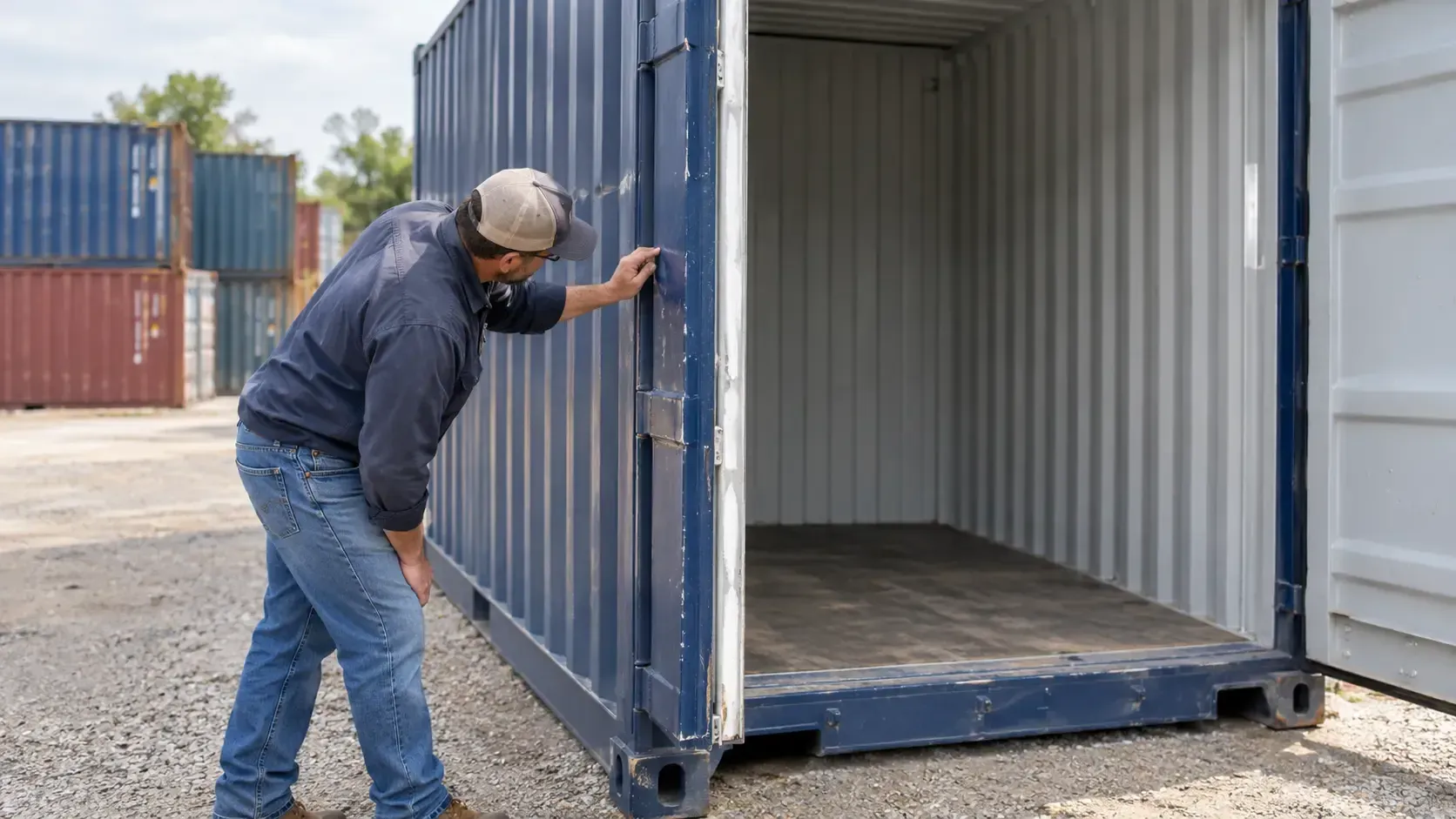
Table of Contents
- Introduction
- What One-Trip Actually Means
- Why a One-Trip Shipping Container Has Already Sailed
- What Marks Are Normal and What Are Not
- One-Trip Compared to New and Used
- When You Do Not Need a One-Trip Container
- What to Check Before You Buy Either Way
- Conclusion
- Request a Quote on a 20 or 40 Foot Container
- Frequently Asked Questions
Key Takeaways
- One-trip means one loaded voyage from the factory, not zero.
- It is the closest thing to new that most buyers in Texas will realistically find.
- Minor scuffs, scrapes, and small dents from stacking are normal and not defects.
- For ground-level storage, a good used container often does the same job for less.
- Terminology varies between sellers, so ask what is actually in the yard rather than trusting a label.
Introduction
A one-trip shipping container has made exactly one loaded ocean voyage before being sold, so when you buy a container described that way you are getting something close to new rather than factory fresh. It left a manufacturer, carried cargo across once, and was sold at the destination instead of being shipped back empty.
That single voyage is the whole distinction, and it explains both why these containers look almost new and why they are not advertised as never used.
What One-Trip Actually Means
The term describes how the container reached the country, not its condition grade.
Most shipping containers are built overseas. Returning them empty costs money, so manufacturers often load a new container with freight, send it across once, and sell it on arrival. The voyage pays for the relocation. The buyer gets a container that has been in service for weeks rather than years.
So "one trip" is a history, not a rating. It tells you the container is young and has seen minimal handling. It does not promise an unmarked surface, and any seller implying otherwise is overselling it.
That is also why the phrase exists at all. Calling it new would not be accurate, and calling it used would undersell something that has barely been touched.
Why a One-Trip Shipping Container Has Already Sailed
Even a container in excellent shape has been through a few things on that one voyage.
What it has done:
- Been loaded and sealed at origin, usually with a forklift working inside
- Been stacked, often several high on a vessel, with the corner castings carrying the load
- Crossed an ocean, which means salt air and constant movement
- Been lifted repeatedly by crane and handler at both ports
- Been trucked at least twice on land
None of that damages a sound container. All of it leaves traces. The corner castings and the roof typically show handling first, because that is where the equipment touches.
A one-trip shipping container is therefore a young container with a short, known history, which is genuinely different from a used unit with a decade of unknown handling behind it.
What Marks Are Normal and What Are Not
Knowing the difference saves a lot of unnecessary worry at delivery.
| What you may see | Normal or a problem |
|---|---|
| Light scuffs and scrapes in the paint | Normal |
| Small dents in side panels from stacking | Normal |
| Scratches around the door hardware | Normal |
| Surface marks on the roof | Normal |
| Flaking paint over bare metal | Worth asking about |
| Rust that has pitted the steel | A problem |
| Doors that do not seal or latch cleanly | A problem |
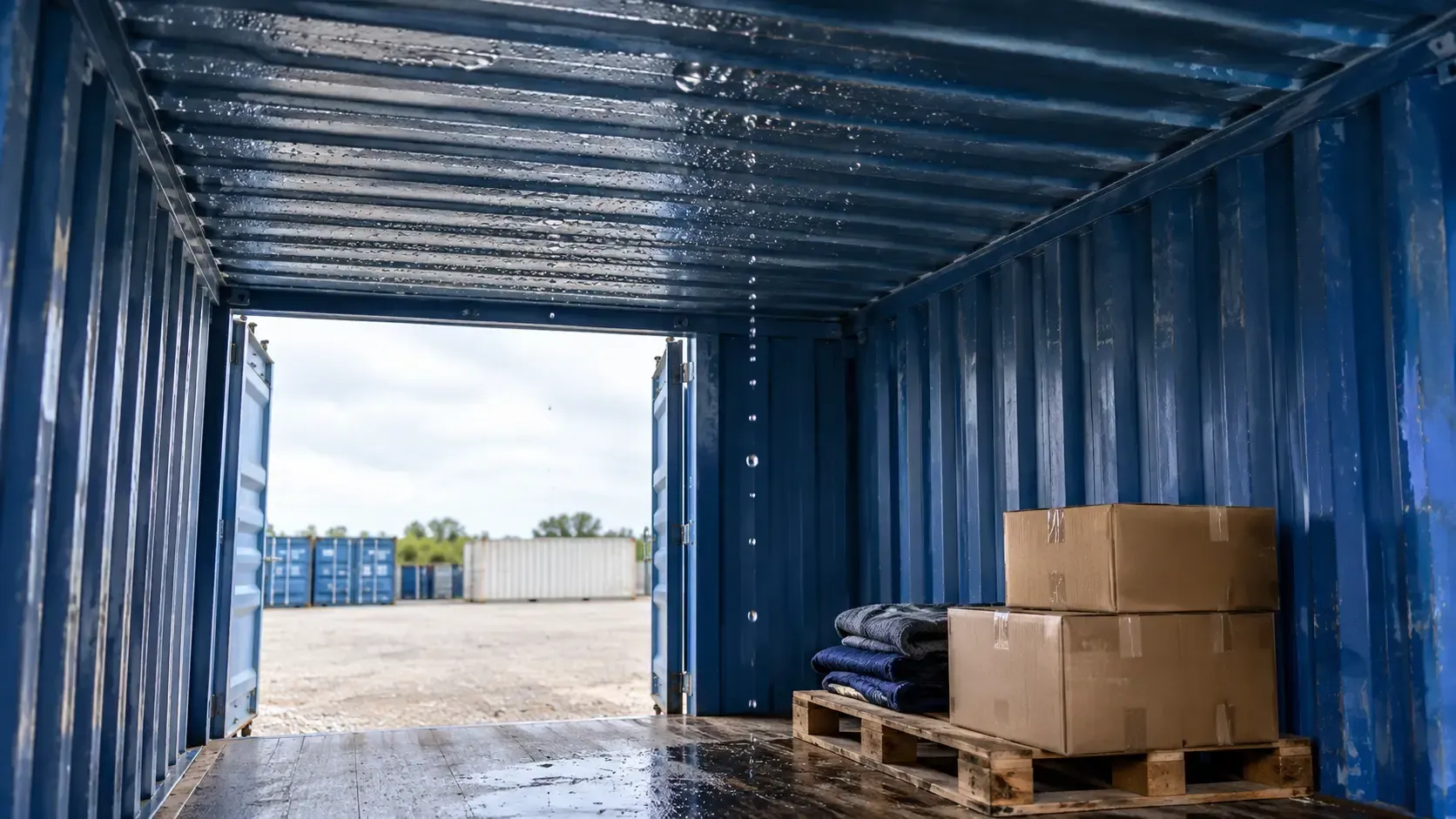
| Light visible from inside with doors closed | A problem |
| Bowed or deformed corner posts | A serious problem |
The doors matter more than the paint. A container that seals properly keeps weather out regardless of how it looks, and one with a compromised door gasket will let water in no matter how new the paint is.
Check the floor too. It is the one part that takes direct abuse during loading, and it is easy to overlook when you are looking at the outside.
One-Trip Compared to New and Used
The honest version of this comparison is less dramatic than most sellers make it.
- Factory fresh, never loaded, is rare on the US market and priced accordingly.
- One trip is near new condition with a single voyage behind it.
- Used, meaning multiple years in service, varies enormously and is where condition grading actually matters.
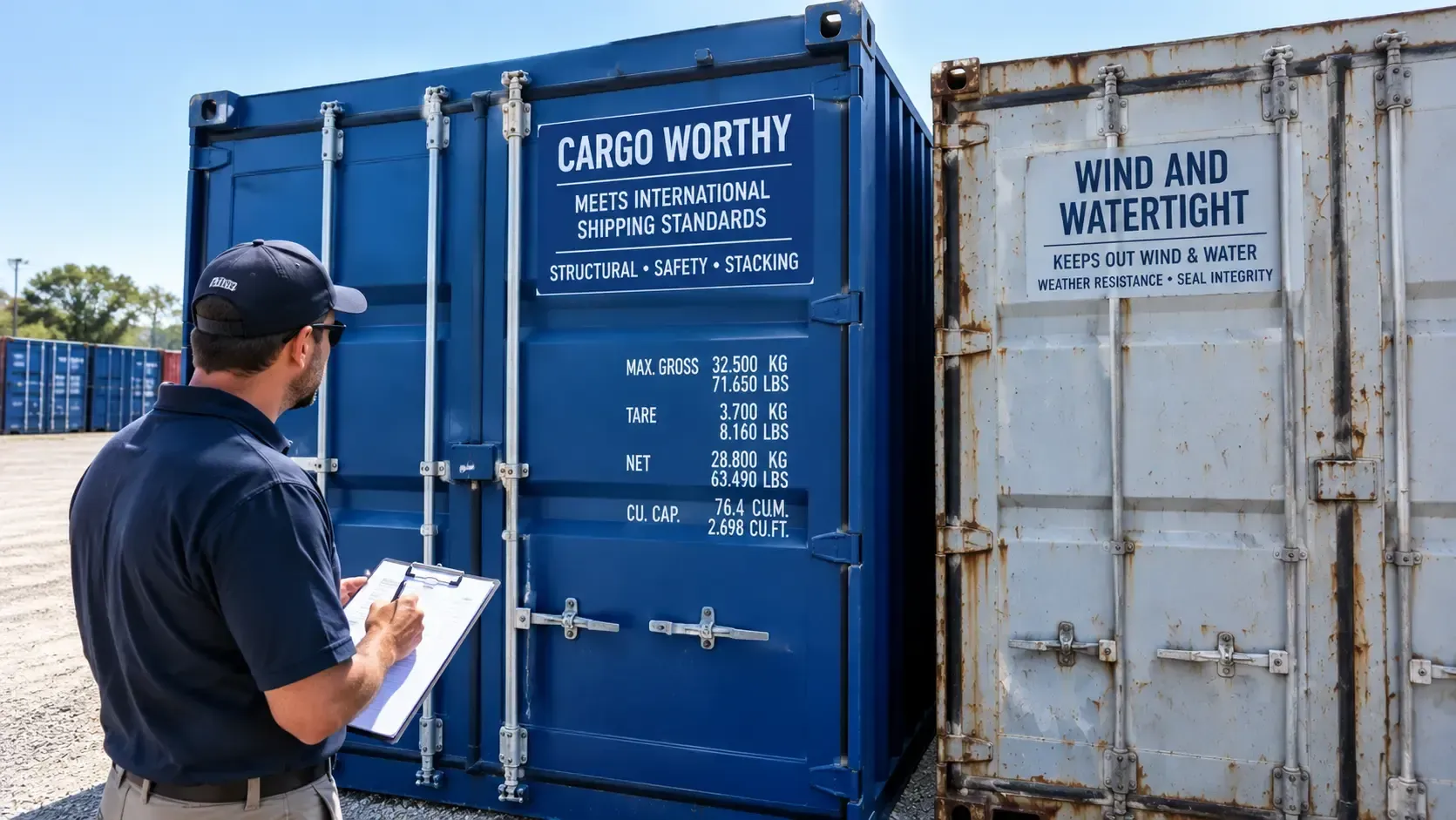
The gap between one trip and a good used container is mostly cosmetic. The gap between a good used container and a poor one is structural, which is why grading language exists for used units and the related question of wind and watertight versus higher grades is worth understanding before you shop used.
Our containers are better than wind and watertight and are inspected before sale or rental, in 20 foot and 40 foot sizes, and used units may show normal signs of wear from previous use. What is in the yard changes, so the practical move is to ask what is available now.
When You Do Not Need a One-Trip Container
Worth saying plainly: a lot of buyers pay for near new condition they will never use.
If the container is going to sit on your property as container grades storage, holding equipment, tools, inventory, or household goods, what actually matters is that it is dry, that the doors seal, and that the structure is sound. A clean used container does that job.
One trip earns its premium when appearance matters, such as a container visible from a storefront or a client facing site, when it will be modified and you want to start from good steel, when it is going into long term outdoor use and you want maximum remaining service life, or when it needs to be shipped again later.
For a unit parked behind a shop or at the back of a property, the difference is paint. Spend the money on the right size instead, since going from a 20 foot to a 40 foot is a decision you cannot undo cheaply.
What to Check Before You Buy Either Way
The same checks apply whether a container is near new or a decade old.
- Open and close both doors fully. They should swing and latch without force.
- Stand inside with the doors closed. Any daylight is a leak.
- Look at the roof for standing water, dents that hold water, or repairs.
- Check the floor for soft spots, gouges, or previous patching.
- Inspect the corner castings and posts for deformation.
- Look at the seals all the way around the door frame.
- Ask what the container carried if it is used, since some cargo leaves residue.
We encourage customers to inspect available containers when possible, which is the right instinct. A ten minute walk around answers questions no description can.
If you cannot inspect in person, ask for photographs of the interior with the doors closed, the floor, and the roof. Those three tell you most of what you need.
Conclusion
One trip means one loaded voyage, not none. It is the closest to new that most buyers will find, it will carry minor handling marks, and those marks are not defects. Whether you need that condition depends entirely on what the container is for. If it is going to sit on your land holding your things, a sound used unit with doors that seal does the same work. Check the doors, the floor, and the roof on anything you buy, and ask what is actually in the yard rather than shopping by label.
Request a Quote on a 20 or 40 Foot Container
If you are weighing a new or used container for a property anywhere around Brazoria County, Houston, or the surrounding area, tell us what it is for and we will tell you honestly which condition makes sense. A Mobile Box is family owned and operated, we deliver on our own trucks, and our containers are inspected before sale or rental. Call the yard at (979) 665-8899 or the office at (979) 798-5798, or
request a quote and we will let you know what is available now.
Frequently Asked Questions
What is a one-trip shipping container?
Describe the item or answer the question so that site visitors who are interested get more information. You can emphasize this text with bullets, italics or bold, and add links.Is a one-trip container the same as new?
Not quite. It is near new, with a single voyage and minimal handling behind it, but it has been loaded, stacked, lifted by crane, and trucked. Expect light scuffs and possibly small dents. Factory fresh containers that have never been loaded are rare in the US market.
Are dents on a one-trip container normal?
Small dents in side panels from stacking, light paint scuffs, and scratches near the door hardware are all normal. What is not normal is pitted rust, doors that will not seal, daylight visible from inside, or bowed corner posts.
Do I need a one-trip container for storage?
Often not. For a container sitting on your property holding tools, equipment, or household goods, what matters is that it is dry, the doors seal, and the structure is sound. A good used container does that for less.
What should I check before buying a shipping container?
Open and close both doors, stand inside with them shut and look for daylight, check the roof for standing water or dents, inspect the floor for soft spots, and look at the corner castings and door seals. Inspect in person where possible.
Recent Posts