Why Is Water Dripping Inside My Storage Container When It Hasn't Rained?
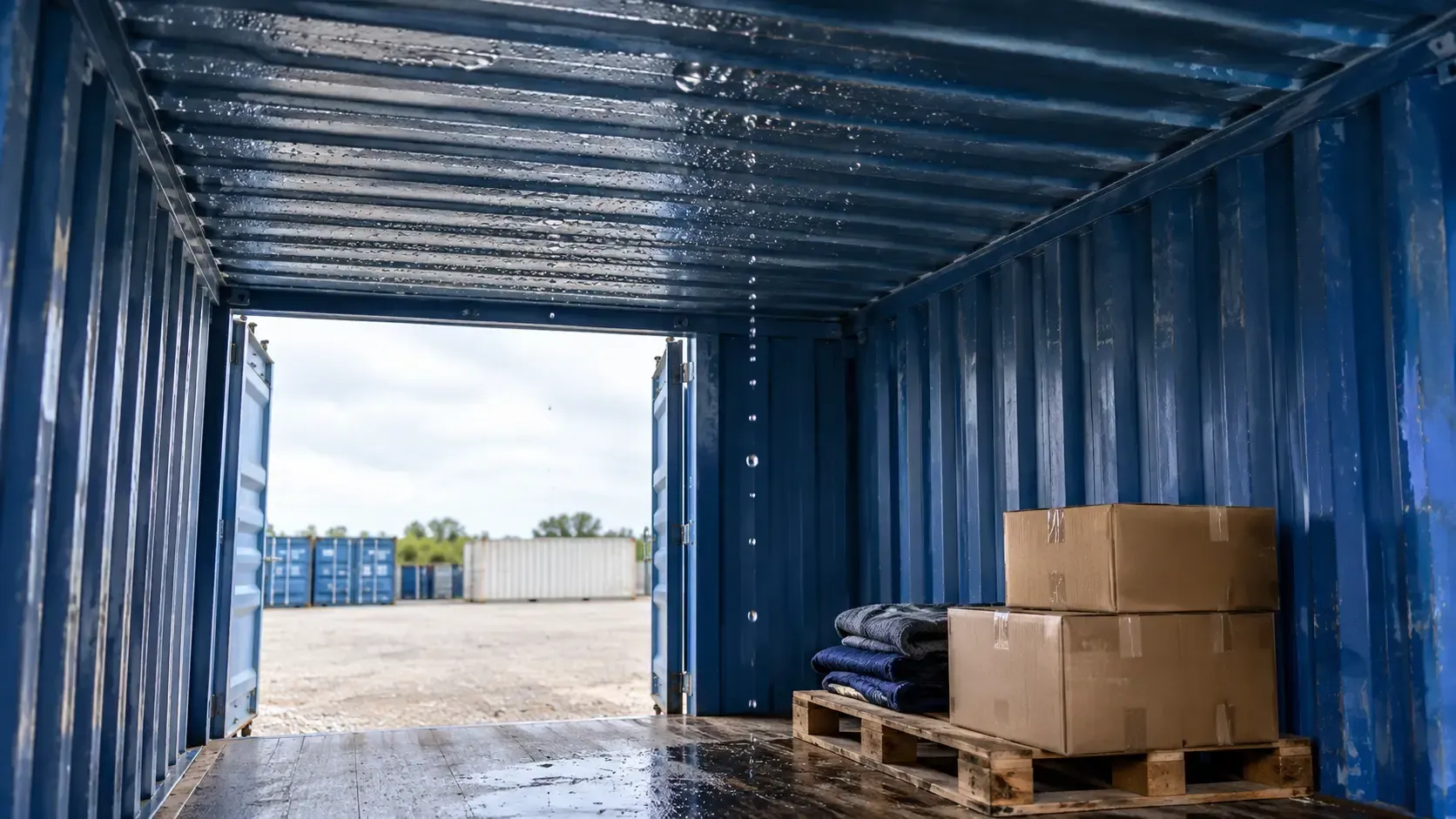
Table of Contents
- Introduction
- It Is Condensation, Not a Leak
- How Storage Container Condensation Forms Overnight
- How to Tell Condensation From an Actual Leak
- What You Put Inside Makes It Worse
- How to Stop Condensation in a Storage Container
- Why Placement Matters More Than People Expect
- Conclusion
- Ask About Placement and Moisture Control
- Frequently Asked Questions
Key Takeaways
- Warm humid air inside meets a steel roof cooled overnight, and moisture forms on the ceiling.
- It drips from the ceiling down, which is how you tell it from a roof leak.
- Damp contents loaded in are the most common hidden source of the moisture.
- Airflow, desiccant, and getting items off the floor fix most of it.
- Setting the container on blocks keeps ground moisture out of the equation.
Introduction
Water dripping inside a steel container with no rain is almost always condensation rather than a leak, which is why it shows up in a container rental that is otherwise perfectly sound. Warm, humid Gulf Coast air inside the box meets a steel ceiling cooled overnight, moisture forms on the underside of the roof, and it falls on whatever is stacked below.
People call it container rain, and on the Texas coast it is one of the most common complaints that has nothing to do with the container being faulty.
It Is Condensation, Not a Leak
The giveaway is where the water is, and where it is not.
Condensation forms across the whole ceiling fairly evenly, because the entire roof panel cools at the same rate. A leak enters at one point: a seam, a dent that holds water, a door seal, a repair. One produces a general dampness over everything, the other produces a wet patch under one spot.
The second giveaway is timing. Condensation appears after a clear cool night, often following a warm humid day. A leak appears after rain. If your container was wet on a morning when nothing fell from the sky, the moisture came from inside.
This matters because the fixes are completely different. Nobody can patch their way out of a condensation problem, and no amount of ventilation fixes a bad door seal.
How Storage Container Condensation Forms Overnight
The mechanism is the same one that puts dew on your windshield, in a metal box with no insulation.
The sequence:
- Daytime heat warms the container and everything in it, and warm air holds more moisture.
- Humid air is sealed in when the doors close, carrying whatever moisture is present.
- Night falls and a front moves through, dropping the outside temperature quickly.
- The steel roof loses heat fast, because thin uninsulated steel has nothing to slow it down.
- Air touching the cold ceiling drops below its dew point, and the moisture it was holding condenses out.
- Droplets form and fall onto boxes, furniture, and equipment below.
The Gulf Coast is close to ideal conditions for this. High humidity most of the year, warm days, and cold fronts that drop the overnight temperature sharply. Storage container condensation here is a seasonal certainty rather than a rare event, and it is worst in the transitional months when the day to night swing is biggest.
How to Tell Condensation From an Actual Leak
Five minutes of checking settles it.
| What you observe | Points to |
|---|---|
| Ceiling damp across the whole span | Condensation |
| Water in one spot under a seam or dent | Leak |
| Wet after a clear cool night | Condensation |
| Wet after rain only | Leak |
| Daylight visible with the doors closed | Leak |
| Damp walls and musty smell throughout | Condensation |
| Standing water on the roof outside | Potential leak point |
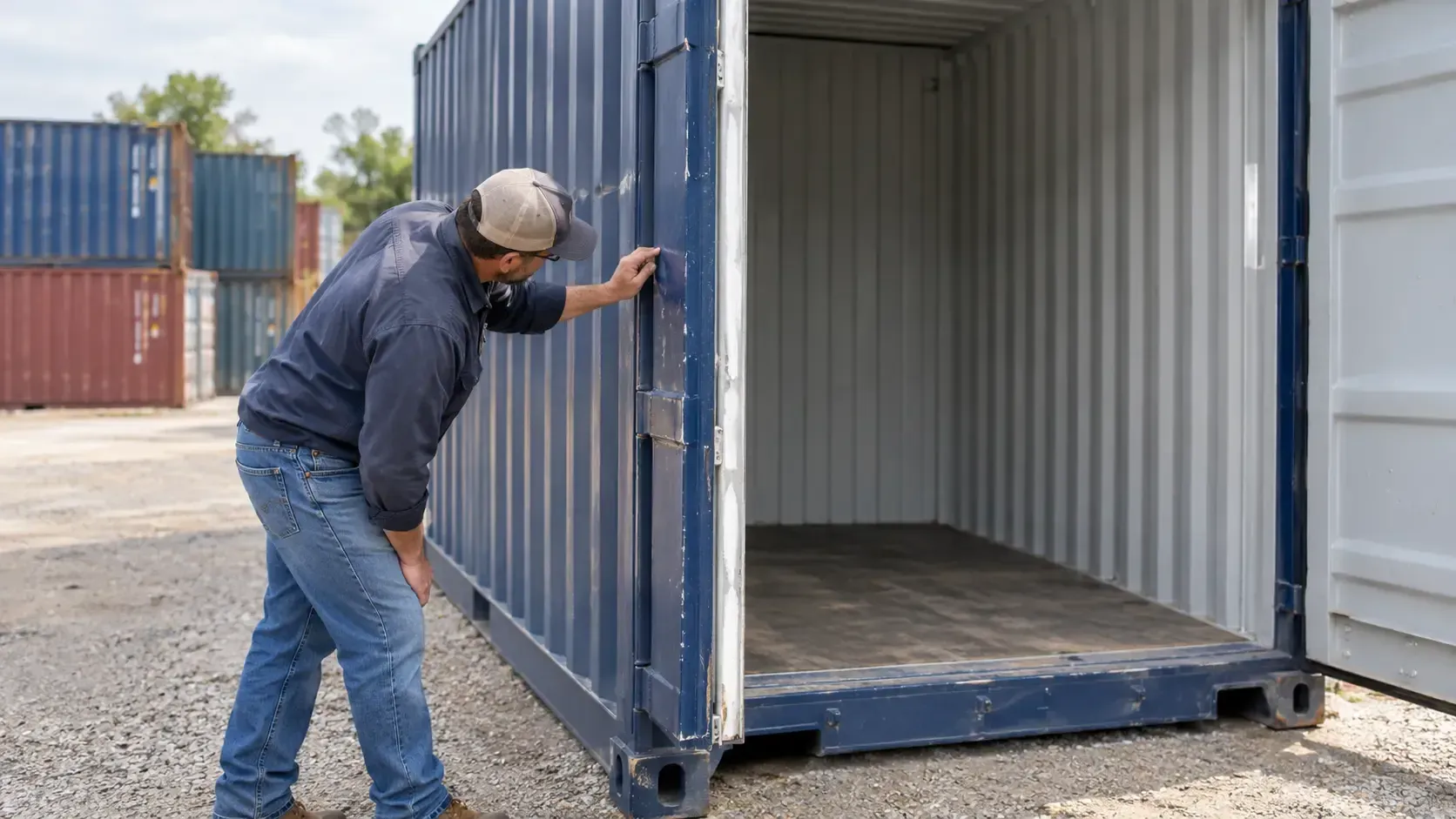
Stand inside with the doors shut and let your eyes adjust. Any daylight is a hole. If you see none and the container still gets wet, it is condensation, and the fix is managing moisture and airflow rather than sealing anything.
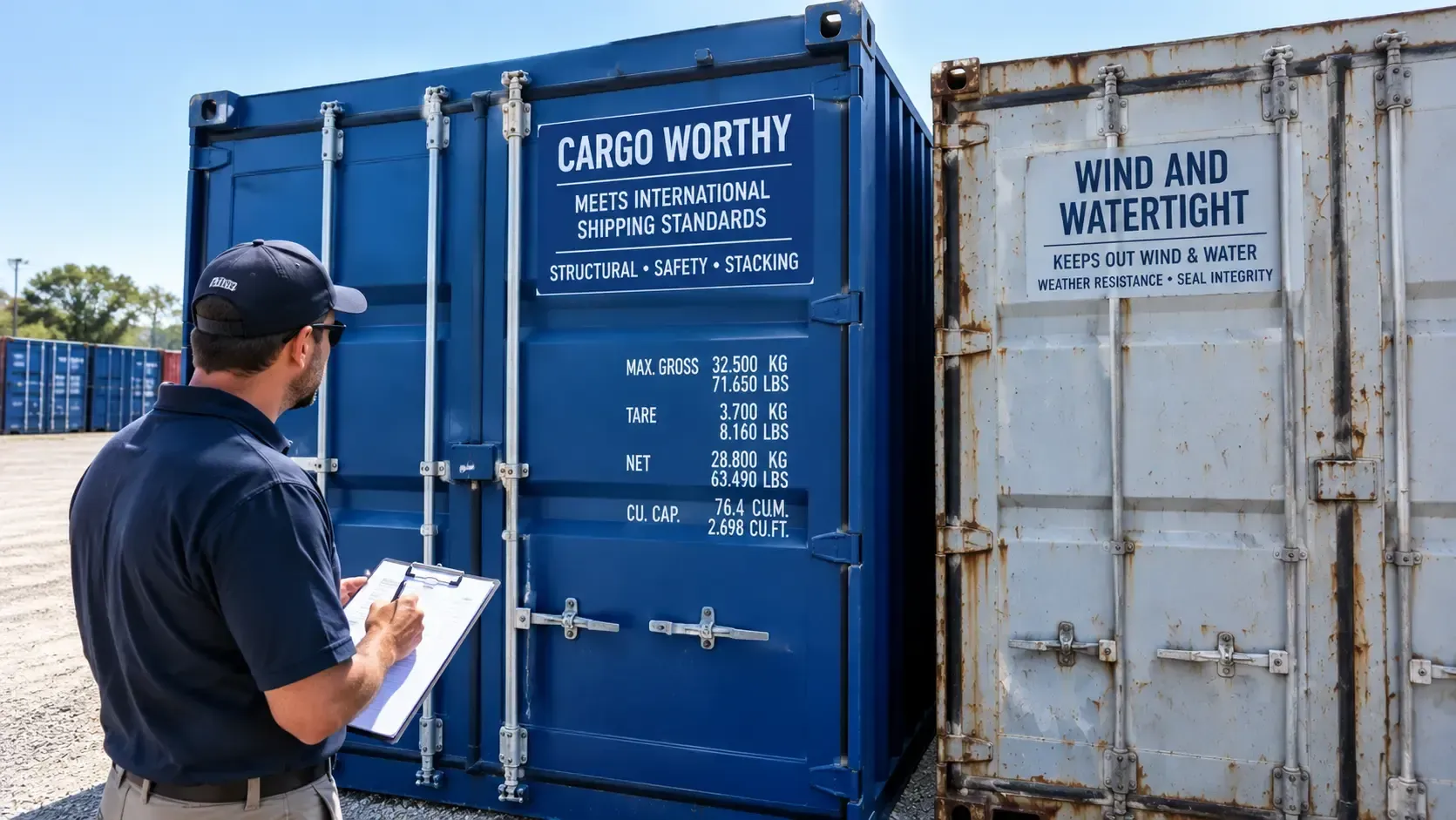
Containers are built to keep weather out, and ours are wind and watertight when properly closed and maintained. That seal is also what keeps humid air in, which is the trade behind this whole problem.
What You Put Inside Makes It Worse
Most of the moisture that condenses on the ceiling was carried in by the contents.
The usual sources:
- Damp items loaded in, including anything stored outdoors beforehand
- Fresh lumber or firewood, which releases a surprising amount of water
- Cardboard boxes, which absorb and release moisture continuously
- Fabric, mattresses, and upholstery, stored before they were fully dry
- Soil on tools, equipment, or lawn gear
- Anything loaded on a humid day, since the air sealed in came with it
Load damp things into a sealed steel box and you have built a small humid climate that cycles every night. Drying items before they go in is the single most effective thing most people can do, and it costs nothing.
Avoid wrapping contents in plastic sheeting. It traps moisture against the surface rather than keeping it out, and it is a common way people turn a damp problem into a mold problem.
How to Stop Condensation in a Storage Container
Several small measures together work better than any single one.
- Get everything off the floor, on pallets or blocks, so air can move underneath.
- Leave gaps between stacks and away from the walls, rather than packing wall to wall.
- Use desiccant sized for the space, and replace it on a schedule.
- Add vents if the container will be loaded long term, since passive airflow reduces the humidity that can condense.
- Use plastic bins rather than cardboard for anything that matters.
- Cover furniture with breathable cloth, never plastic sheeting.
- Open the doors on dry days to exchange the air, which is free and surprisingly effective.
- Load dry, which is where most of the benefit is.
Opening the doors deserves emphasis. On a dry, breezy day, twenty minutes with both doors open exchanges the trapped humid air for something drier. Doing that a few times a season prevents a lot of grief.
Why Placement Matters More Than People Expect
How the container sits affects how much moisture it has to deal with in the first place.
A container sitting directly on grass or bare dirt is in contact with ground moisture that evaporates upward into the floor continuously. That moisture has to go somewhere, and it ends up as humidity inside the box. We recommend setting the container on four inch thick concrete blocks when delivering onto a grassy or dirt surface, which breaks that contact and lets air move underneath.
The other placement factors:
- A level, firm surface such as concrete, asphalt, or compacted gravel is ideal
- Slight slope or level setting so water drains off the roof rather than pooling in a dent
- Sun exposure, where shade reduces the daily temperature swing that drives the cycle
- Drainage around the base, so the container is not sitting in a low spot
Standing water on the roof is worth checking periodically. A dent that holds a puddle keeps that section of steel cold and damp, which makes condensation worse directly above it and can eventually cause corrosion. Our steel containers are inspected before sale or rental, and placement is the part that stays in your hands afterward.
Conclusion
Water inside a dry-weather container is condensation, formed when humid air sealed inside meets a roof that cooled overnight. It is physics rather than a fault, and on the Gulf Coast it is going to happen. The fixes are unglamorous and they work: load things dry, keep them off the floor, leave air gaps, use desiccant, open the doors on dry days, and set the container on blocks so ground moisture is not feeding the problem. Check for daylight with the doors shut first, because if you find any, you have a different problem entirely.
Ask About Placement and Moisture Control
If your rental is sweating or you are planning where a container should sit, talk to us before delivery rather than after. A Mobile Box is family owned and operated, we deliver on our own trucks across Brazoria County, Houston, and the surrounding area, and we will walk through placement, blocking, and what to do about moisture for how you are actually using it. Call the office at (979) 798-5798 or
ask the office and we will sort it out.
Frequently Asked Questions
Why is my storage container wet inside when it has not rained?
It is condensation. Warm humid air sealed inside meets a steel ceiling that cooled overnight, the air drops below its dew point, and moisture forms on the roof and drips down. People call it container rain.
How do I know if it is condensation or a leak?
Condensation appears evenly across the ceiling after a clear cool night. A leak appears in one spot after rain. Stand inside with the doors closed and look for daylight. Any daylight means a hole, and no daylight with recurring dampness means condensation.
How do I stop condensation in a shipping container?
Load items dry, keep everything off the floor on pallets, leave air gaps between stacks and walls, use desiccant and replace it regularly, add vents for long term use, and open the doors on dry days to exchange the air.
Should a storage container sit on blocks?
On grass or dirt, yes. Setting it on four inch concrete blocks breaks contact with ground moisture and lets air move underneath. A level, firm surface such as concrete, asphalt, or compacted gravel is ideal.
Can I wrap my things in plastic to keep them dry?
Avoid it. Plastic sheeting traps moisture against the surface rather than keeping it out, which often turns a damp problem into a mold problem. Use breathable cloth covers and plastic bins instead of cardboard.
Recent Posts