Can You Store a Generator, Gas Cans, or Propane Tanks in a Rented Storage Container?
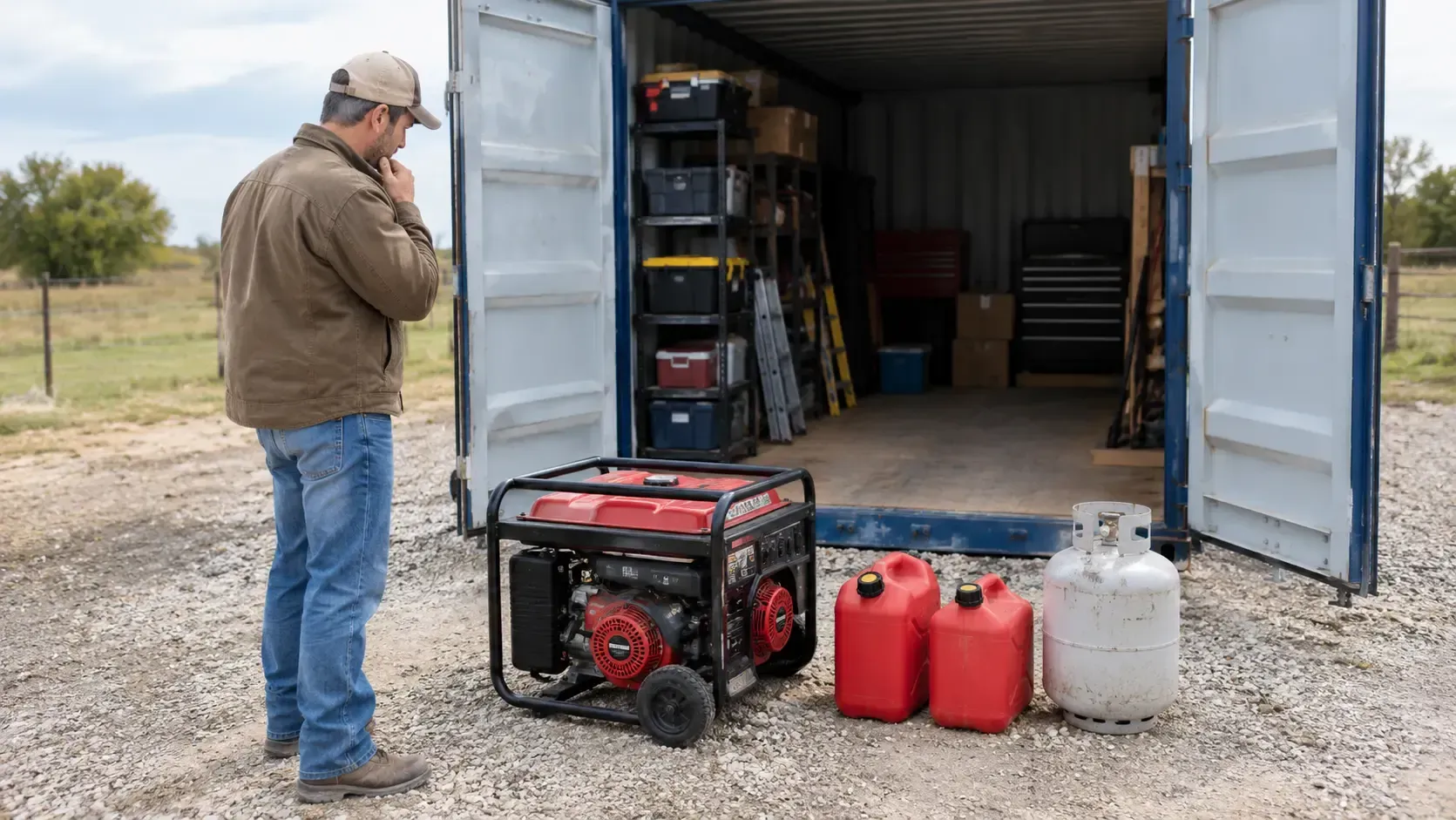
Table of Contents
- Introduction
- The Rule, and Where to Confirm It
- Why Storage Container Safety Is Different in a Sealed Steel Box
- Gas Cans, Propane Tank Storage, and Fuel Filled Equipment
- What Else Does Not Belong Inside
- Generator Storage Done the Right Way
- What Is Fine to Store and How to Do It Well
- Conclusion
- Ask What Can and Cannot Go In
- Frequently Asked Questions
Key Takeaways
- Hazardous, flammable, illegal, and restricted materials cannot be stored in a rented container.
- Loose fuel containers and propane cylinders are the clearest examples.
- A closed steel box in Texas sun builds heat and holds vapor, which is the real hazard.
- A generator can usually be stored once it has been run dry and the battery dealt with.
- Confirm specifics with the rental agreement and the office before you load, not after.
Introduction
Generally no, because certain hazardous, flammable, illegal, or restricted materials cannot be stored in a rented container, and fuel, propane, and fuel filled equipment are the usual concerns because a closed steel box traps vapors and heats up in the Texas sun. Always confirm against your rental agreement before you load anything you are unsure about.
The short version: the equipment is often fine once the fuel is dealt with. The fuel itself is not.
The Rule, and Where to Confirm It
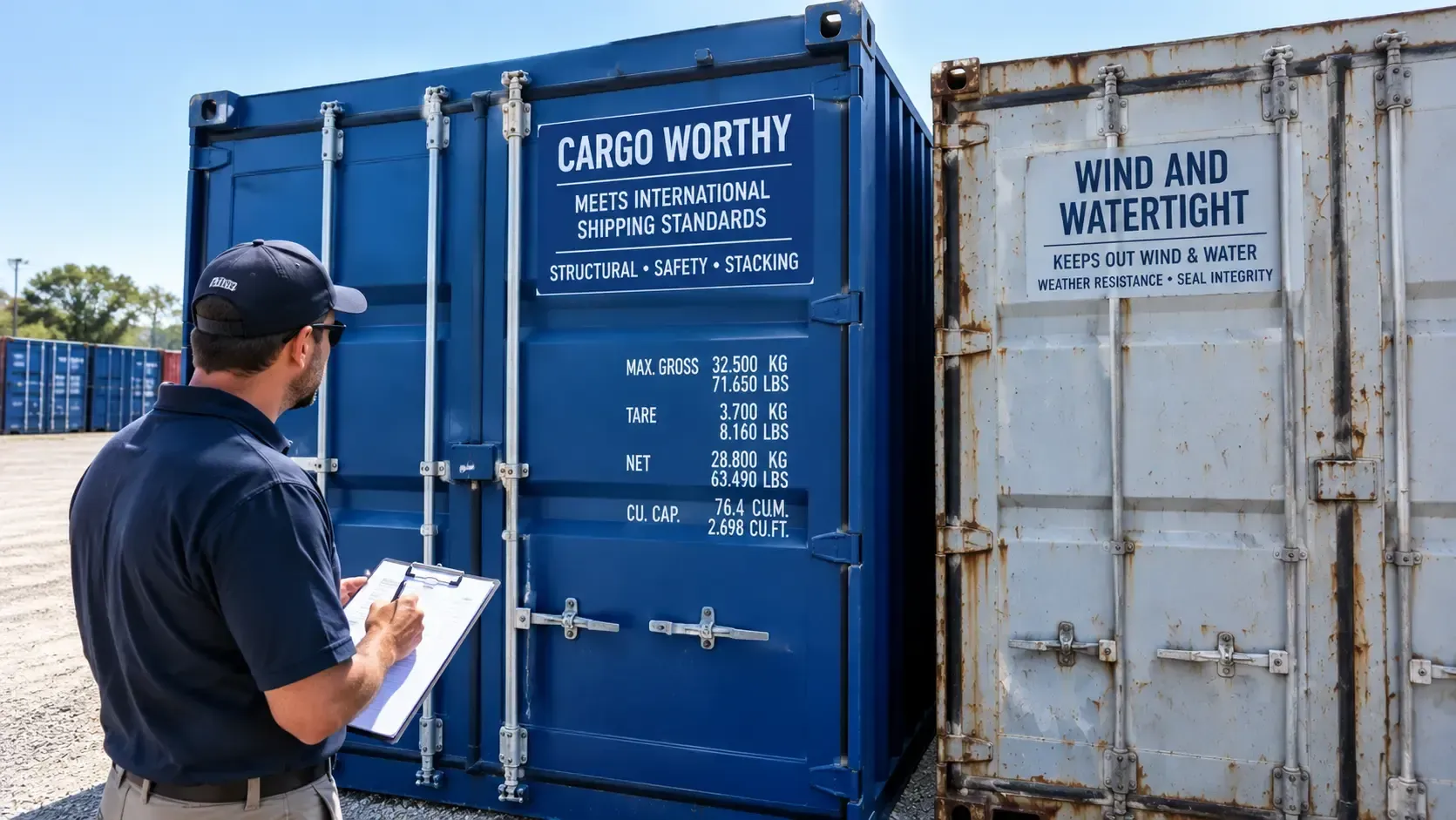
Our rental terms state plainly that certain hazardous, flammable, illegal, or restricted materials cannot be stored in our containers.
That language covers more than most people assume. Flammable liquids are the obvious case, but hazardous also captures pressurized gas, corrosives, oxidizers, and anything with a hazard label on the packaging. If a product carries a warning about vapors, ignition sources, or ventilation, it belongs outside the container.
Two places to check before loading:
- Your rental agreement, which is the document that actually governs what you signed
- The office, for anything the agreement does not address clearly
That second one is not a formality. Edge cases come up constantly, and one phone call settles a question that a wrong guess could turn into a serious problem. We would rather answer it than deal with the alternative.
Why Storage Container Safety Is Different in a Sealed Steel Box
A shipping container is not a shed, and the difference matters for anything that produces vapor.
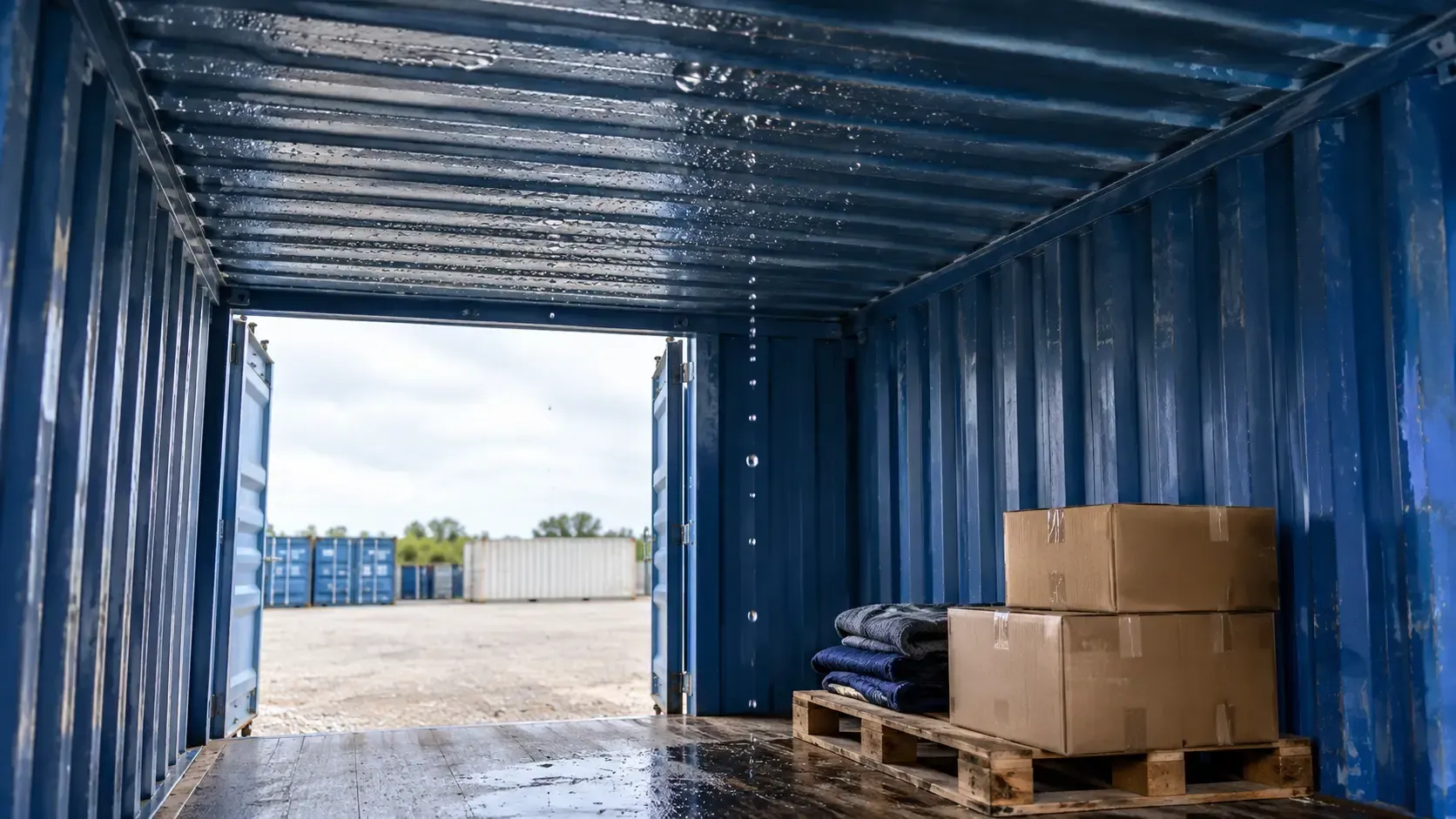
Three things are working at once. Steel absorbs solar heat efficiently, so a closed container in direct Texas sun gets considerably hotter inside than the outside air. There is no meaningful ventilation when the doors are shut, so nothing clears. And the box is close to airtight when properly sealed, which is what keeps weather out and also what keeps everything else in.
Put those together and you have a space that heats through the day and holds whatever accumulates in it. Fuel vapor is heavier than air, so it settles and concentrates near the floor rather than dispersing. Heaat raises the rate at which it is produced.
That is the whole storage container safety argument. It is not that fuel is uniquely dangerous. It is that this particular enclosure does the opposite of what you would want around it.
Gas Cans, Propane Tank Storage, and Fuel Filled Equipment
These are the three questions we get asked most, and they have different answers.
| Item | The answer |
|---|---|
| Gas cans, full or partial | No. Flammable liquid, and the clearest exclusion |
| Propane cylinders | No. Pressurized flammable gas, and they can leak |
| Generator with fuel in the tank | Ask first. Run it dry and the conversation changes |
| Mower or equipment with a tank | Ask first. Same reasoning |
| Empty, purged fuel containers | Ask. Empty is not always empty |
| Spare fuel kept alongside equipment | No, even if the equipment itself is approved |
That last row catches people. Approving the generator does not approve the gas can next to it. They are separate items and the fuel container is the one that is excluded outright.
Propane deserves a flat answer. Cylinders can leak, the gas is heavier than air, and a container floor is exactly where it would pool. Take tanks off whatever they are attached to and store them outdoors, upright, in the shade, as the cylinder itself instructs.
What Else Does Not Belong Inside
The exclusions extend well past fuel, and some of these surprise people.
- Paints, solvents, thinners, and adhesives, which are flammable and give off vapor
- Pool chemicals and pesticides, which are hazardous and react badly to heat
- Automotive fluids, including oil, brake fluid, and antifreeze
- Aerosol cans, which are pressurized and heat sensitive
- Fireworks and ammunition, which have their own storage requirements
- Perishable food, which attracts pests and spoils quickly in heat
- Anything living, plants or animals
- Illegal or restricted items, which is self explanatory
Beyond the rules, heat alone rules out a longer list. Candles, vinyl records, electronics, medications, and anything with a storage temperature printed on the label will not enjoy a Texas summer inside a steel box. That is a practical limit rather than a prohibition, but the outcome is the same.
If you are unsure whether something qualifies, the answer is to ask rather than to guess and hope.
Generator Storage Done the Right Way
A generator is usually storable, and the preparation is what makes it so.
What to do before it goes in:
- Run it until the fuel is gone, which removes the main issue entirely.
- Or drain the tank and the carburetor, if running it dry is not practical.
- Disconnect or remove the battery, and keep it somewhere you can maintain it.
- Let it cool completely before it goes anywhere enclosed.
- Change the oil if it is going to sit a long time.
- Confirm with the office that the prepared unit is acceptable.
- Leave the spare fuel can at home. This is the step people skip.
A fully drained generator is a different proposition from one with a half tank, and saying so when you call makes the conversation straightforward.
Heat matters here too. The sealed box climbs in temperature daily, and that cycling is hard on seals, hoses, and rubber components over a long storage period. Worth knowing before you park something expensive in there for a year. Condensation inside a container is the companion problem, and how container heat and trapped humid air interact explains a lot of what happens to stored equipment.
What Is Fine to Store and How to Do It Well
Most of what people want to store is completely fine, and worth saying so after a list of exclusions.
Furniture, tools, equipment, inventory, building materials, seasonal items, business records, and household goods all store well. Containers are used routinely for job site storage and for business inventory for exactly that reason.
To store it well in this climate:
- Keep everything off the floor on pallets or blocks
- Use plastic bins rather than cardboard, which absorbs moisture
- Load things dry, since damp contents drive condensation
- Leave air gaps between stacks and away from the walls
- Cover furniture with breathable cloth, never plastic sheeting
- Put what you need most near the doors, because you will want it first
A container sitting on a level, firm surface, loaded dry, with contents off the floor, will keep your things in good condition for a long time. The limits are specific and short, and everything outside them works.
Conclusion
Fuel, propane, and the rest of the hazardous and flammable list stay out, because a sealed steel box in Texas sun builds heat and holds vapor in exactly the wrong way. The equipment is usually welcome once the fuel is gone, which for a generator or a mower means running it dry and dealing with the battery. Everything else, furniture to inventory to job site gear, stores well with basic moisture habits. When something is borderline, check the rental agreement and call the office. One question before loading is considerably cheaper than finding out afterward.
Ask What Can and Cannot Go In
If you are not sure whether something belongs in your container, call before you load it rather than after. A Mobile Box is family owned and operated, delivering portable storage containers on our own trucks across Brazoria County, Houston, and the surrounding area in 20 and 40 foot sizes. Call the office at (979) 798-5798 or
get in touch and we will give you a straight answer, including when the answer is no.
Frequently Asked Questions
Can you store gas cans in a storage container?
No. Loose fuel containers are flammable liquids, and hazardous, flammable, illegal, or restricted materials cannot be stored in a rented container. This applies even when the equipment they go with has been approved.
Can you store propane tanks in a shipping container?
No. Propane is pressurized flammable gas, cylinders can leak, and the gas is heavier than air so it would pool on the container floor. Remove tanks from whatever they are attached to and store them outdoors and upright, as the cylinder instructs.
Can I store a generator in a storage container?
Usually yes, once it is prepared. Run it until the fuel is gone or drain the tank and carburetor, remove or disconnect the battery, let it cool fully, and confirm with the office. Leave any spare fuel can at home.
Why can't flammable items go in a storage container?
A closed steel box in direct sun gets considerably hotter inside than the outside air, has no ventilation with the doors shut, and is close to airtight. Fuel vapor is heavier than air, so it settles and concentrates rather than dispersing.
What else should not go in a storage container?
Paints, solvents and adhesives, pool chemicals and pesticides, automotive fluids, aerosols, fireworks and ammunition, perishable food, and anything living. Heat also rules out candles, electronics, records, and medications as a practical matter.
Recent Posts